
Historical report: The figures below reflect reporting published on November 19, 2026, at 01:12 UTC+8, not current market conditions.
A moving average tracks price over a specified number of days; it describes a past trend rather than setting a price target. In its report, CryptoQuant said bitcoin had fallen below its 200-day moving average of $72,900 and its 365-day moving average of $75,900. The firm classified that position as a return to a bearish phase.
CryptoQuant said bitcoin reached a four-month low of about $61,000 on November 15, erasing gains from a rally that began on August 19. At the time of reporting, bitcoin was trading around $62,500. Julio Moreno, CryptoQuant’s head of research, said the two averages had shifted from support to resistance and argued that a large rally would be difficult to sustain unless bitcoin moved back above them. That is his interpretation of the indicators, not a guaranteed price outcome.
Demand and realized losses
CryptoQuant said its measure of total bitcoin demand growth, which includes spot and perpetual futures activity, had dropped below −400,000 BTC on a 30-day basis—the weakest reading since the start of July. Moreno said a durable recovery would require demand contraction to ease, preferably through spot buying rather than increased perpetual-futures leverage.
The firm also reported a daily net realized loss of 25,800 BTC during the sell-off, its largest such reading since July 13. CryptoQuant interpreted this as evidence that holders selling at a loss, rather than leverage alone, contributed to the decline.
CryptoQuant’s Bitcoin Analyst Consensus Index showed 58% of analysts bullish, down from 77% on October 7 and the most bearish reading since November 22, 2025. Its Bull Score Index stood at 10 out of 100, a reading the firm labeled “extreme bear.” CryptoQuant said those conditions did not support a sustainable recovery at the time.
What the ‘value zone’ does—and does not—indicate
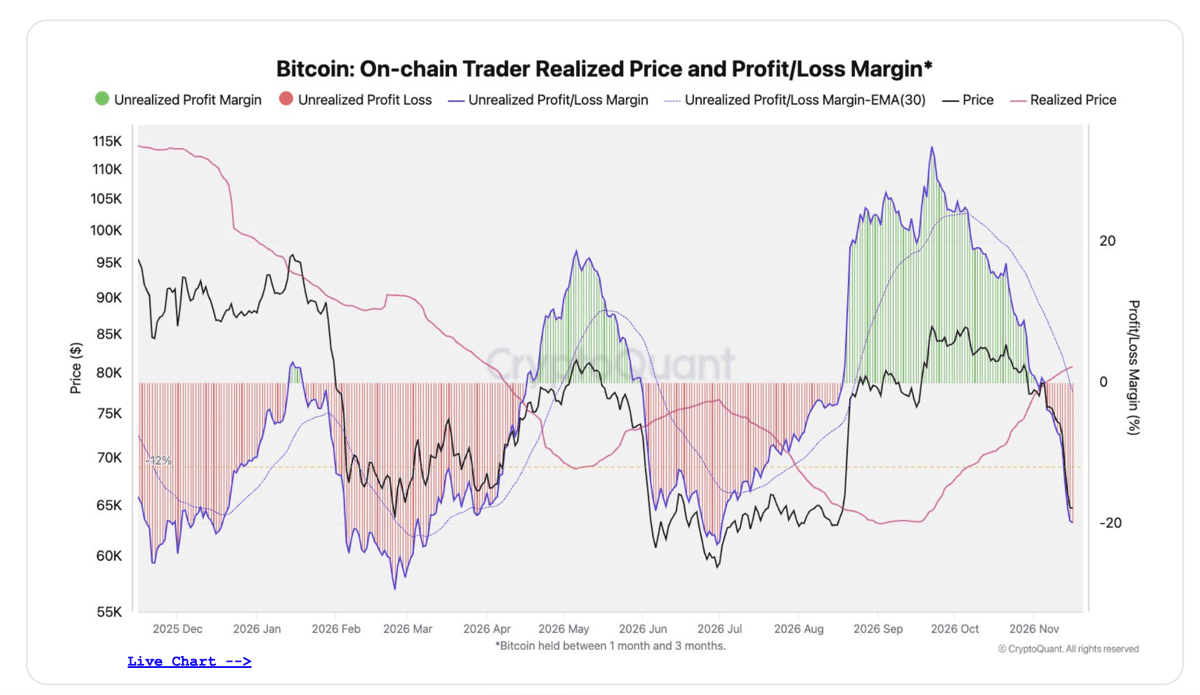
Despite those bearish readings, CryptoQuant called bitcoin’s price a “value zone” because traders’ unrealized profit/loss margin had fallen to −20%, its most negative level since July 1. The measure compares price with traders’ cost basis. Moreno cautioned that appearing cheap on that measure does not mean the decline is over; he said bottoming formations tend to last at least two months.
CryptoQuant also identified $62,000–$65,000 as a range where long-term holders had sold heavily and new investors had bought. It suggested those buyers might defend their purchase prices, potentially helping bitcoin hold the range. Neither that possibility nor the “value zone” label establishes a floor or forecasts when a recovery will begin.