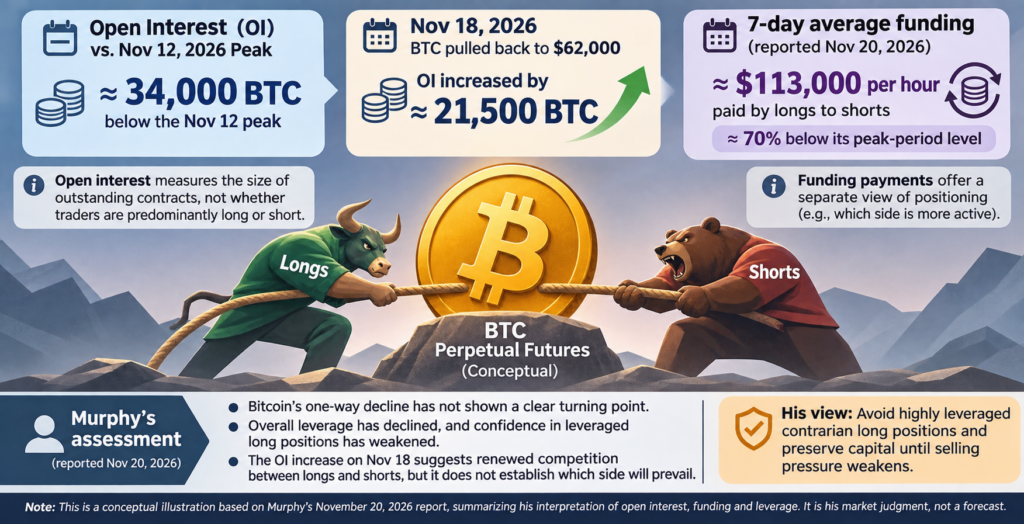
Open interest measures the size of outstanding contracts, not whether traders are predominantly long or short. Funding payments offer a separate view of positioning. In a November 20, 2026 report, crypto analyst Murphy pointed to a rise in Bitcoin perpetual-futures open interest during a price pullback, while cautioning that the broader leverage picture had weakened.
Murphy said open interest was still about 34,000 BTC below its November 12 peak. Yet when Bitcoin pulled back to $62,000 on November 18, open interest rose suddenly by about 21,500 BTC. Murphy interpreted that increase as renewed competition between longs and shorts; the increase alone does not establish which side would prevail.
Over the seven days preceding the report, funding averaged approximately $113,000 per hour paid by longs to shorts, according to Murphy—about 70% below its peak-period level. He read the continued payments as a sign that longs remained relatively more active, while the lower funding and a concurrent decline in overall leverage suggested weaker confidence in leveraged long positions.
Murphy’s assessment was that Bitcoin’s one-way decline had not shown a clear turning point. He argued against taking highly leveraged contrarian long positions and favored preserving capital until selling pressure weakened. That is his market judgment, not a forecast established by the open-interest and funding figures.