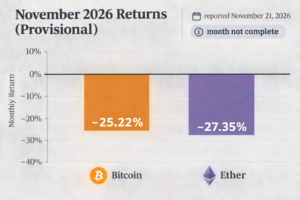
The “four-year cycle” describes a recurring pattern in Bitcoin’s history; it does not establish when a future bull market must arrive. In a report published on November 21, 2026, at 13:17 UTC+8, BlockBeats said Bitcoin had fallen below $56,000 around midday and summarized a debate over why the expected crypto bull market appeared to be “late.”
Risk and liquidity explanations. BlockBeats cited several analysts, including a co-founder of KobeissiLetter, who argued that a bursting AI bubble was the main cause of crypto’s decline since October. They pointed to what they described as excessive leverage, tighter credit and fading liquidity in US AI stocks, and warned that confidence in the banking system could also be affected. The report linked that argument to a Friday US stock-market drop and sharp crypto declines on Friday and Saturday. These are the analysts’ proposed explanations, not established causes of Bitcoin’s move.
Crypto-market supply and demand. The report also said crypto ETFs had recently seen sustained outflows, stablecoin circulation was shrinking, and Strategy could no longer keep buying Bitcoin because its share price was below the value of its BTC holdings. It presented these as signs of worsening demand and liquidity; it did not provide figures to quantify their effect on Bitcoin’s price.
BlockBeats additionally cited expectations of further Federal Reserve rate hikes, political uncertainty after the US midterm elections and uncertainty surrounding a US–Iran conflict as factors weighing on investor confidence. The report offers competing explanations for a price decline, but no test showing that any one factor caused it—or that the four-year cycle can predict what happens next.