A report published on November 24, 2026 described a smaller live set of Bitcoin unspent transaction outputs even while the network kept confirming hundreds of thousands of transactions a day. The count is a ledger of spendable entries, not a measure of how much bitcoin those entries hold, how large the historical chain is, or how many wallets exist.
What the series counts
An unspent transaction output, or UTXO, is a slice of bitcoin a previous transaction left available to spend under specific conditions. Full nodes consult that set to check that a new transaction still references funds that exist. Blockchain.com’s unspent-output series, as compared by Firsthand Bitcoin and reported by Cryptoslate, is one published reading of how many such entries were live. It counts valid outputs and excludes OP_RETURN outputs, which can carry data without creating a spendable entry. A node snapshot taken at a different block, under different counting rules, will not match that series exactly.
The readings, and where they differ
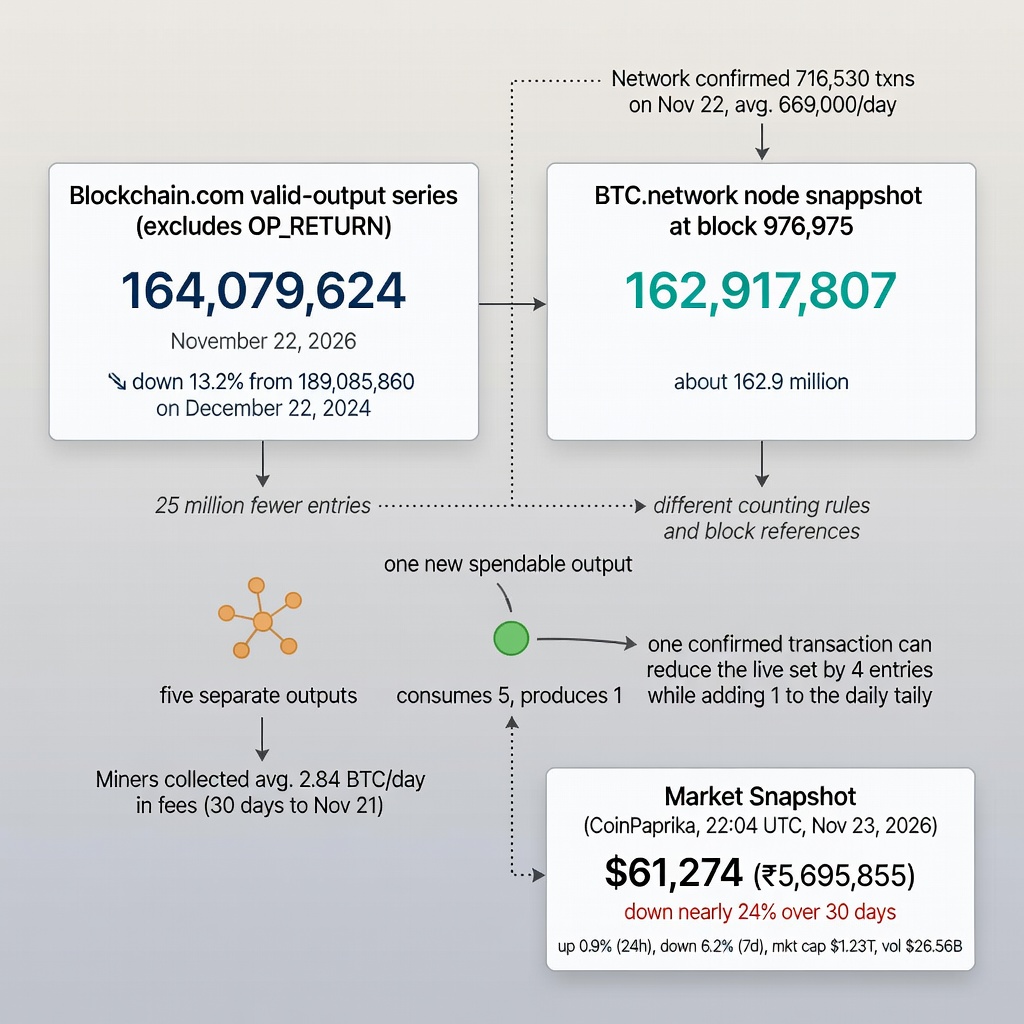
Blockchain.com’s series recorded 164,079,624 unspent outputs on November 22, 2026, down 13.2% from 189,085,860 on December 22, 2024 — about 25 million fewer entries, and about 164.1 million in rounded terms. Firsthand Bitcoin used slightly different readings: 164,088,181 for November 22 and 189,282,514 for its December 2024 high. That comparison implies a drop of 25.2 million and places the November figure at its lowest since February 20, 2024.
BTC.network’s own node copy counted 162,917,807 outputs at block 976,975 on November 22, about 162.9 million. Cryptoslate noted that an exact comparison with the other series would need a shared block reference and matching counting rules, and that its source export had no reading for November 15, 2025. The gap between these figures is a measurement difference, not evidence that one series has located a single cause for the decline.
Why the live set can shrink while blocks keep filling
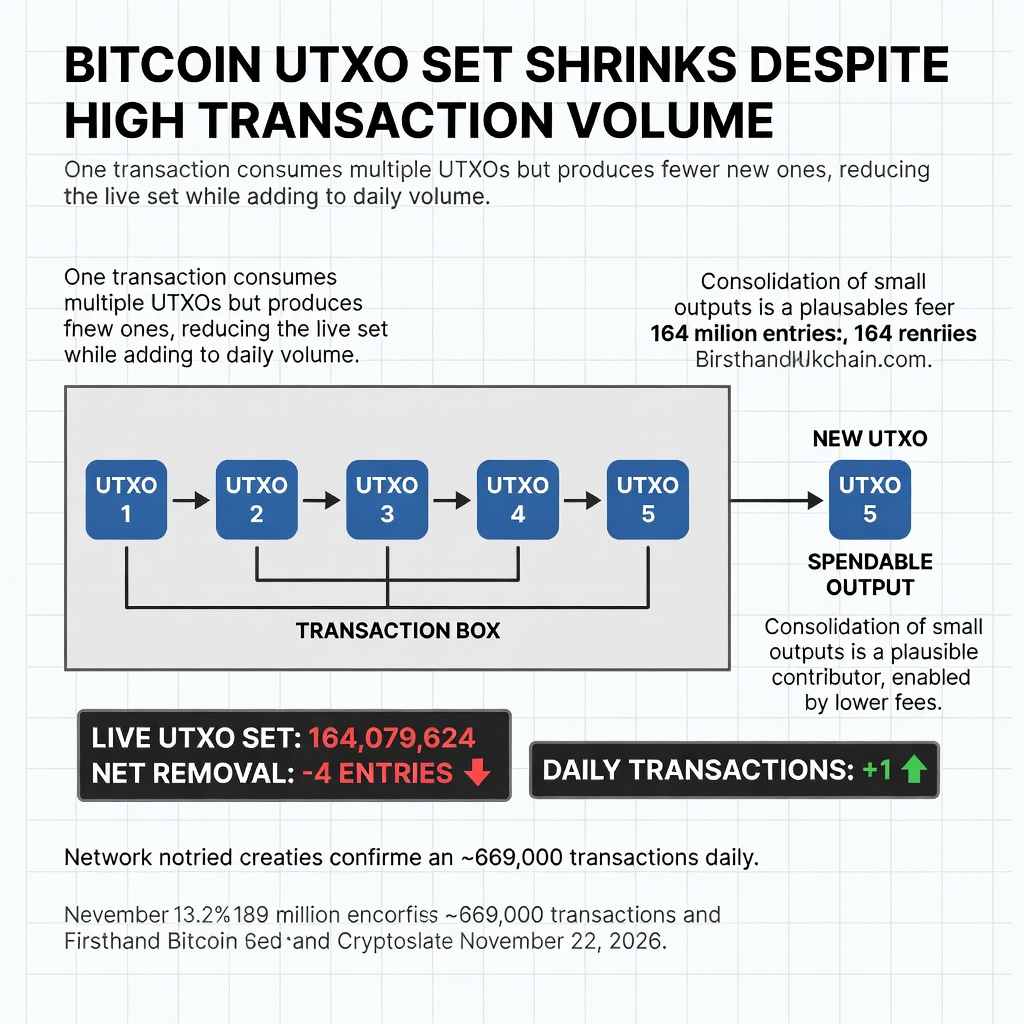
The network still confirmed 638,018 transactions on November 21 and 716,530 on November 22, averaging about 669,000 a day over the seven days through November 22. Transaction volume and the UTXO count move on different arithmetic. One confirmed transaction can consume several outputs and produce just one, so activity itself can reduce the total. Cryptoslate’s illustrative example is a transaction that spends five separate outputs and creates one new spendable output: it adds one to the daily transaction tally and removes four entries from the live set.
The aggregate data do not assign a single cause to the fall since December 2024. Combining many small outputs in one transaction is one plausible contributor. Cheaper fee rates make that consolidation less expensive per additional input, but the totals leave open how much consolidation contributed. Over the 30 days through November 21, miners collected an average of 2.84 BTC a day in transaction fees — a fee backdrop for that possibility, not a measured share of the 25 million-entry decline.
What a smaller set does not change
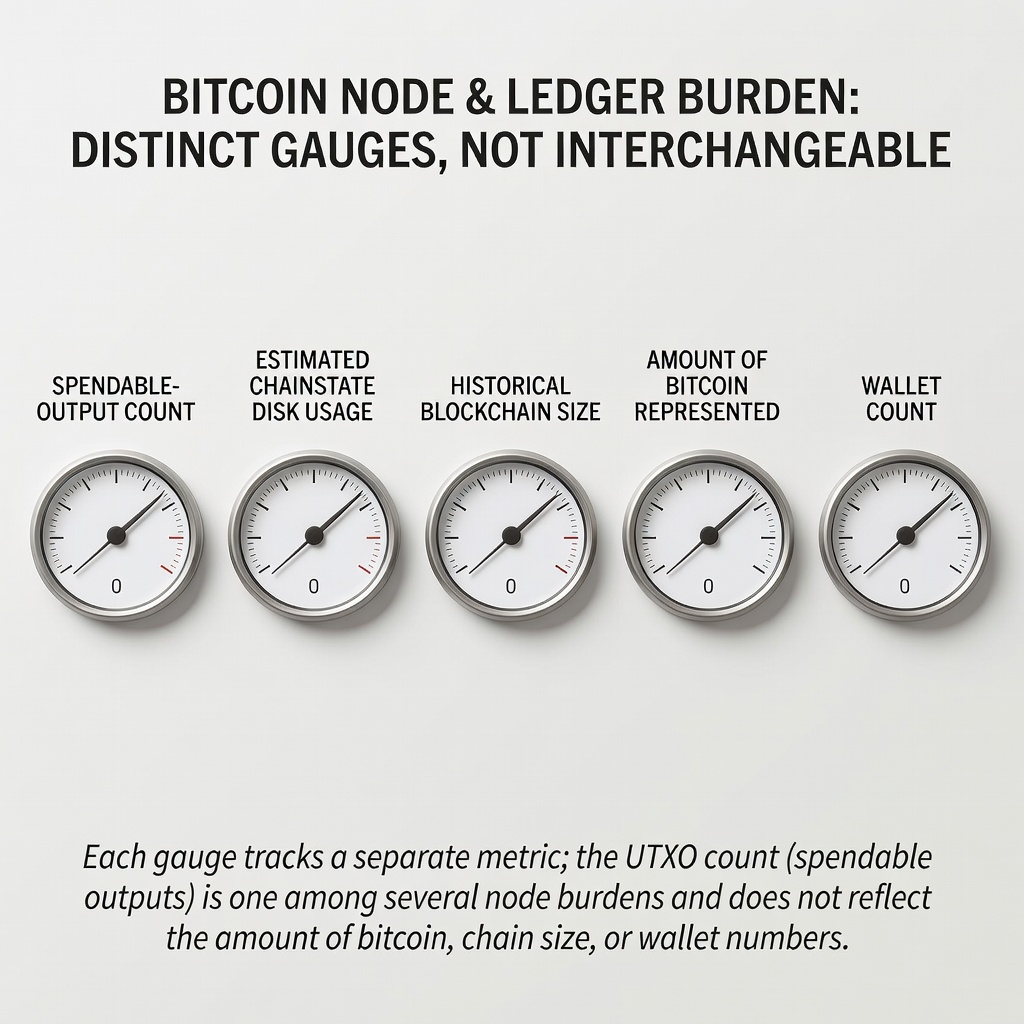
Full nodes have fewer spendable entries to track, but the UTXO count is only one gauge of node burden. Bitcoin Core’s documentation lists the number of outputs and estimated chainstate disk usage as separate measurements. Disk usage, the size of the historical blockchain, the amount of bitcoin those entries represent, and the number of wallets each require their own measure. A smaller UTXO set does not mean less bitcoin exists, and headline transaction counts are not the same thing as growth in tracked spendable entries.
A separate market snapshot
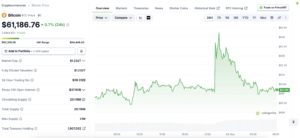
The same reporting placed the UTXO readings next to a difficult price stretch, without tying the output-count decline to the price move. According to CoinPaprika data timestamped 22:04 UTC on November 23, 2026, Bitcoin traded at $61,274 (₹5,695,855), around $61,000 and down nearly 24% over 30 days. In that snapshot it was up 0.9% over 24 hours and down 6.2% over seven days, with a market capitalization of $1.23 trillion and 24-hour volume of $26.56 billion. Those are observed market figures, not an output of the UTXO series and not a forecast.
Later scheduled readings of Blockchain.com’s series and BTC.network’s node snapshots were left as the check on whether the count stabilizes near its February 2024 level or keeps drifting. Any later change in aggregate fee rates would also change how costly further consolidation is, without the November totals already showing how much of the drop consolidation explains.