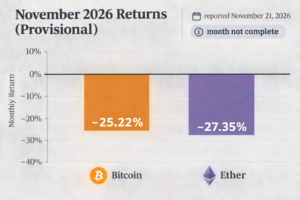
JPMorgan’s estimated bitcoin production cost is a model input, not a price floor. In reporting published on November 21, 2026 (UTC+8), the bank’s analysts put their central estimate at $86,000. Bitcoin was near $65,000 when analysts led by Nikolaos Panigirtzoglou published their report on Wednesday, November 18—a gap of about $21,000. After bitcoin fell below $60,000 on Friday, November 20, for the first time since July, that gap exceeded $26,000.
The analysts said the widening gap likely put more pressure on higher-cost miners. They suggested miners may have sold bitcoin reserves to raise cash, keep operating or fund a move into AI. Those are the analysts’ explanations, not confirmed accounts of individual miners’ decisions.
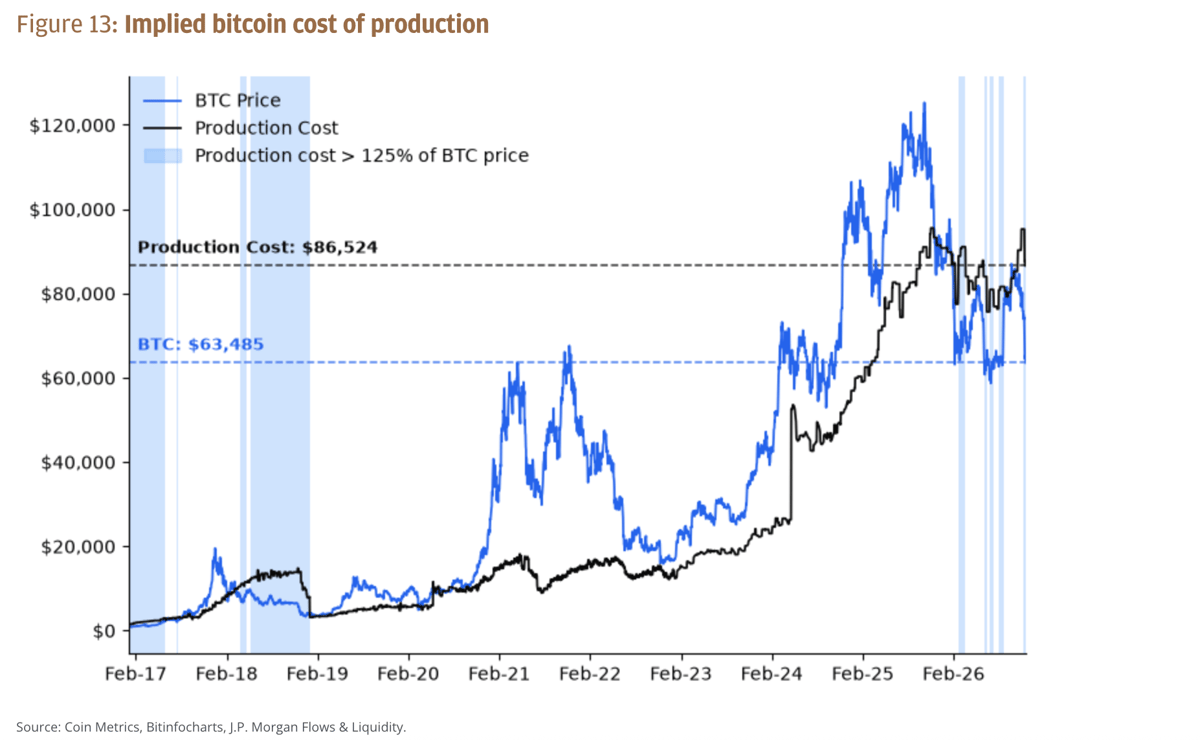
The $86,000 estimate need not stay fixed. JPMorgan said the gap could narrow if unprofitable miners leave the network, hashrate falls and mining difficulty adjusts. That possibility is why a production-cost estimate should not be read as a guaranteed price target.
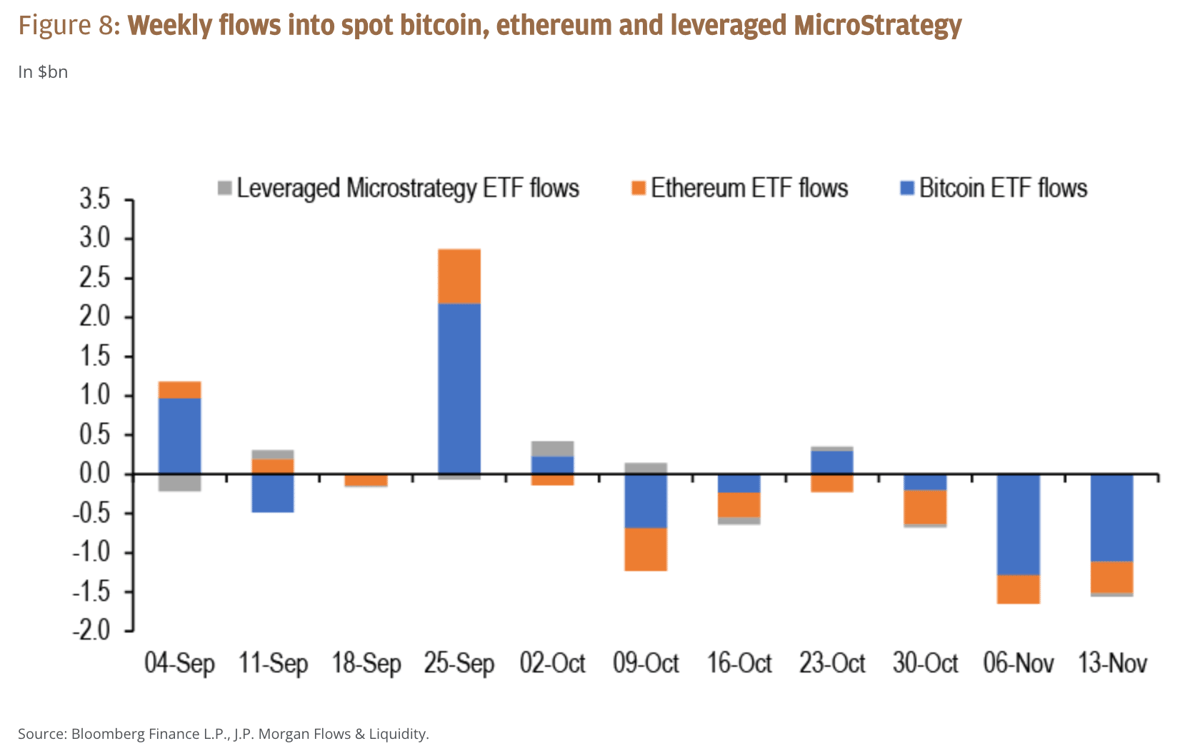
ETF flows offered another possible source of selling pressure. The analysts said spot bitcoin and ether ETFs, as well as leveraged ETFs linked to Strategy, had large outflows in October and November. Weekly outflows were heavier in the latest two weeks than in the preceding four, while equity ETFs attracted inflows. They attributed the broader crypto decline partly to falling tech stocks and changing expectations for Federal Reserve rates.
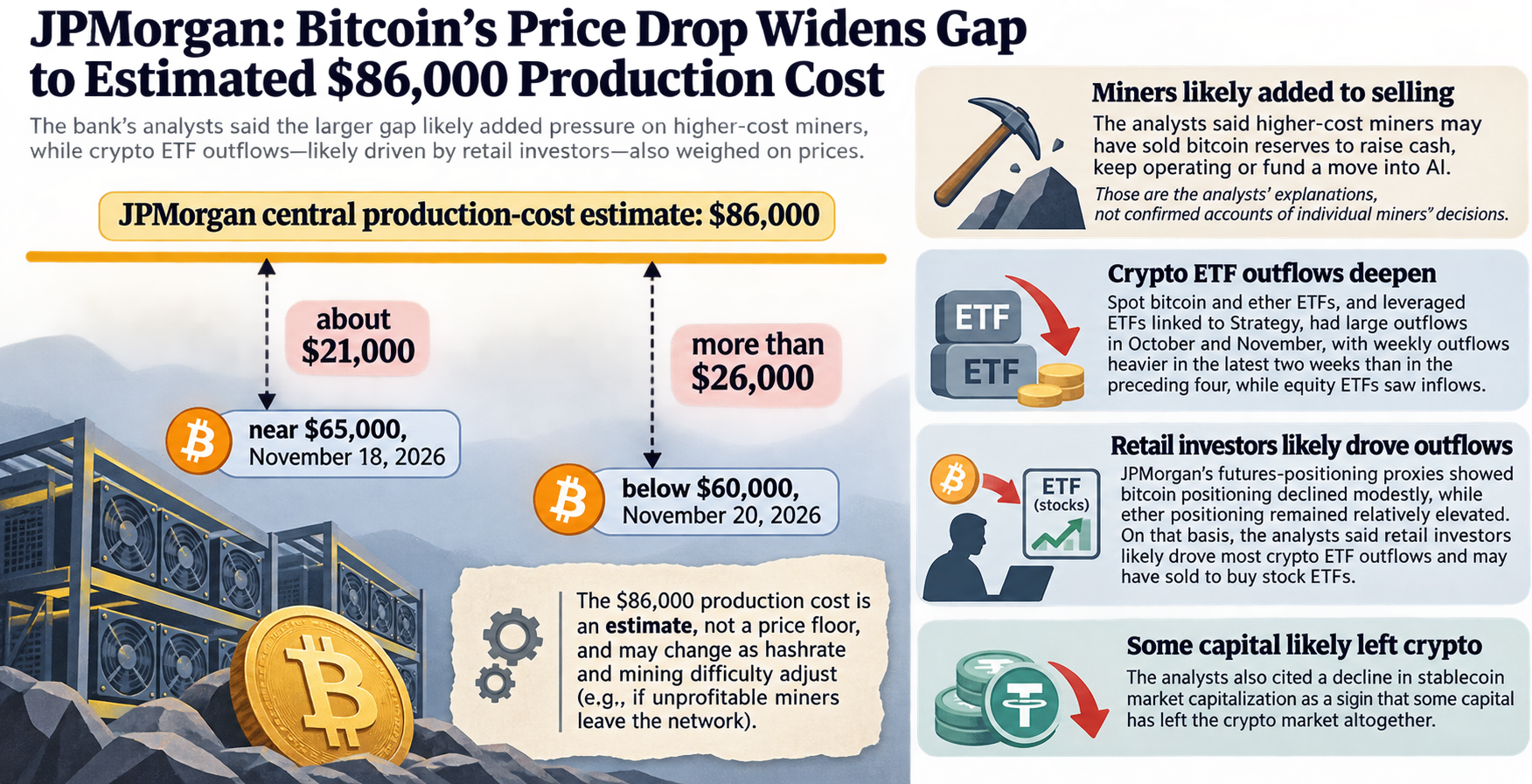
JPMorgan’s futures-positioning proxies showed a modest decline in bitcoin positioning, while ether positioning remained relatively elevated. On that basis, the analysts said retail investors likely drove most crypto ETF outflows and may have sold to buy stock ETFs. They also cited falling stablecoin market capitalization as a sign that some capital had left crypto altogether. Neither the positioning data nor the ETF flows establish why any particular investor sold.