
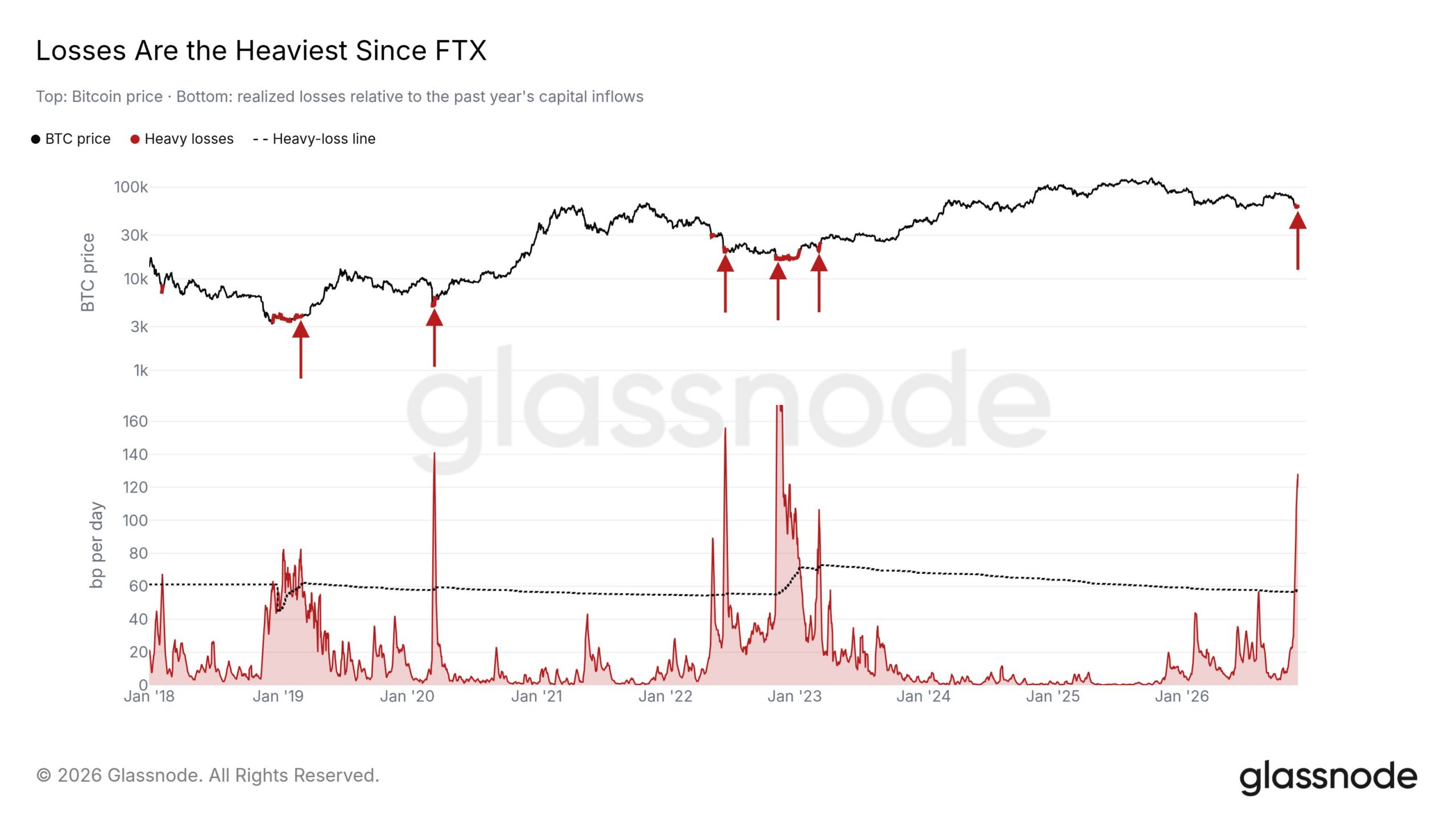
Glassnode’s realized-loss gauge counts losses when bitcoin moves on-chain at a lower price than when it last moved. The firm compares those losses with the capital that entered Bitcoin over the preceding year, so it can compare sell-offs across cycles even as the market grows. On that basis, losses nearly doubled in a week and reached their highest level since FTX collapsed in November 2022, Glassnode reported on November 24, 2026.
Bitcoin was trading at $59,992, more than 50% below its October 2025 peak. It traded below $16,000 during the FTX collapse. The comparison is about the scale of losses relative to inflows, not how close the price is to a bottom. Glassnode found that losses spiked near market lows in early 2019, March 2020 and November 2022. In other episodes in 2018 and 2022, prices still had further to fall.
Bitcoin tracked tech stocks but gave back its gains faster
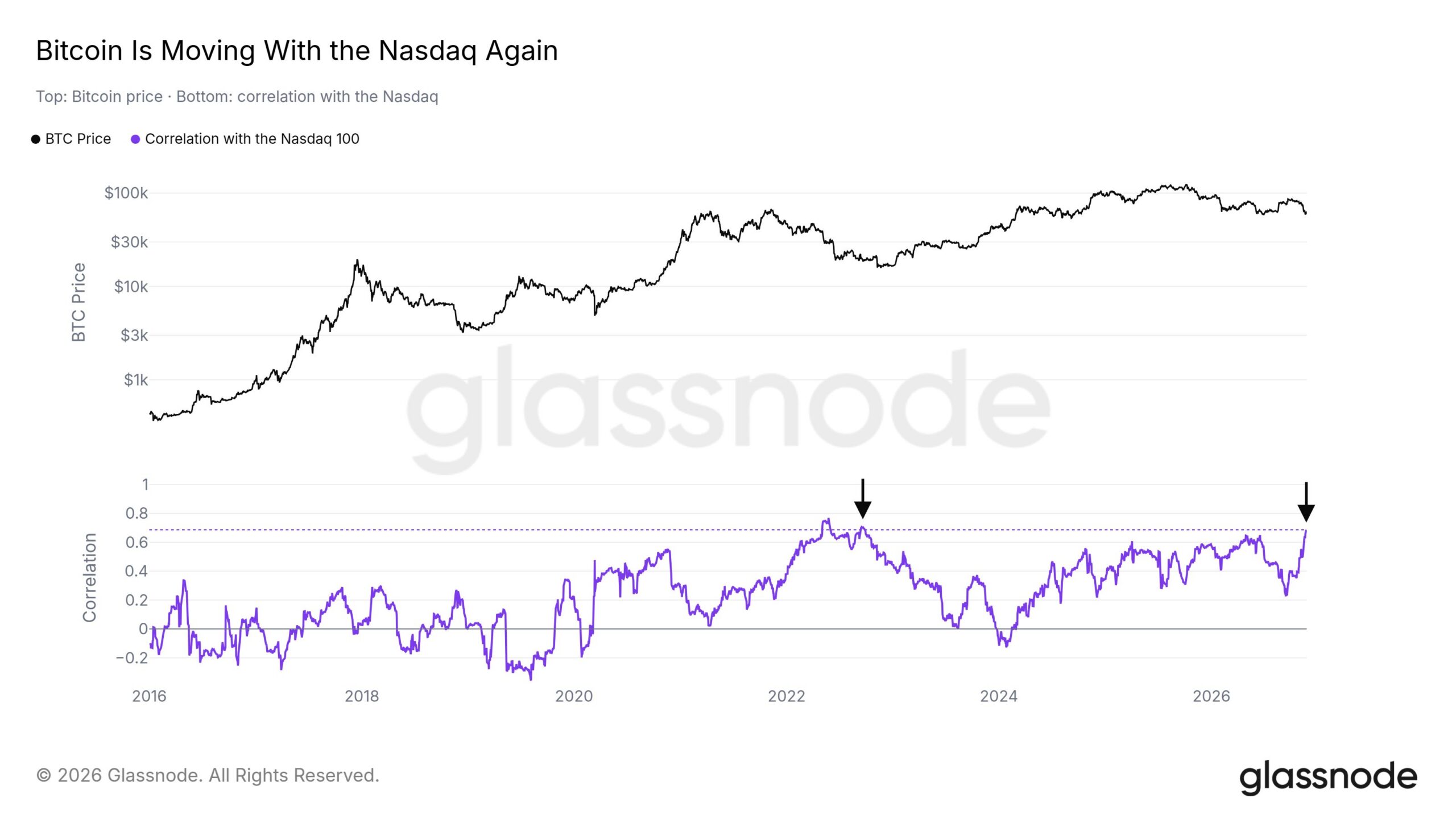
The sell-off coincided with a broader retreat from risky assets. According to Glassnode, Bitcoin’s correlation with the Nasdaq 100 was the highest since September 2022. That did not mean their returns matched: over the preceding 60 trading days, bitcoin tended to gain less when tech stocks rose and lose more when they fell.
On November 23, for example, bitcoin rallied 5% in about half an hour after Nvidia announced Jensen Huang’s return as CEO. Less than six hours later, bitcoin had given back the entire gain, while the Nasdaq 100 retained roughly three-quarters of its advance.
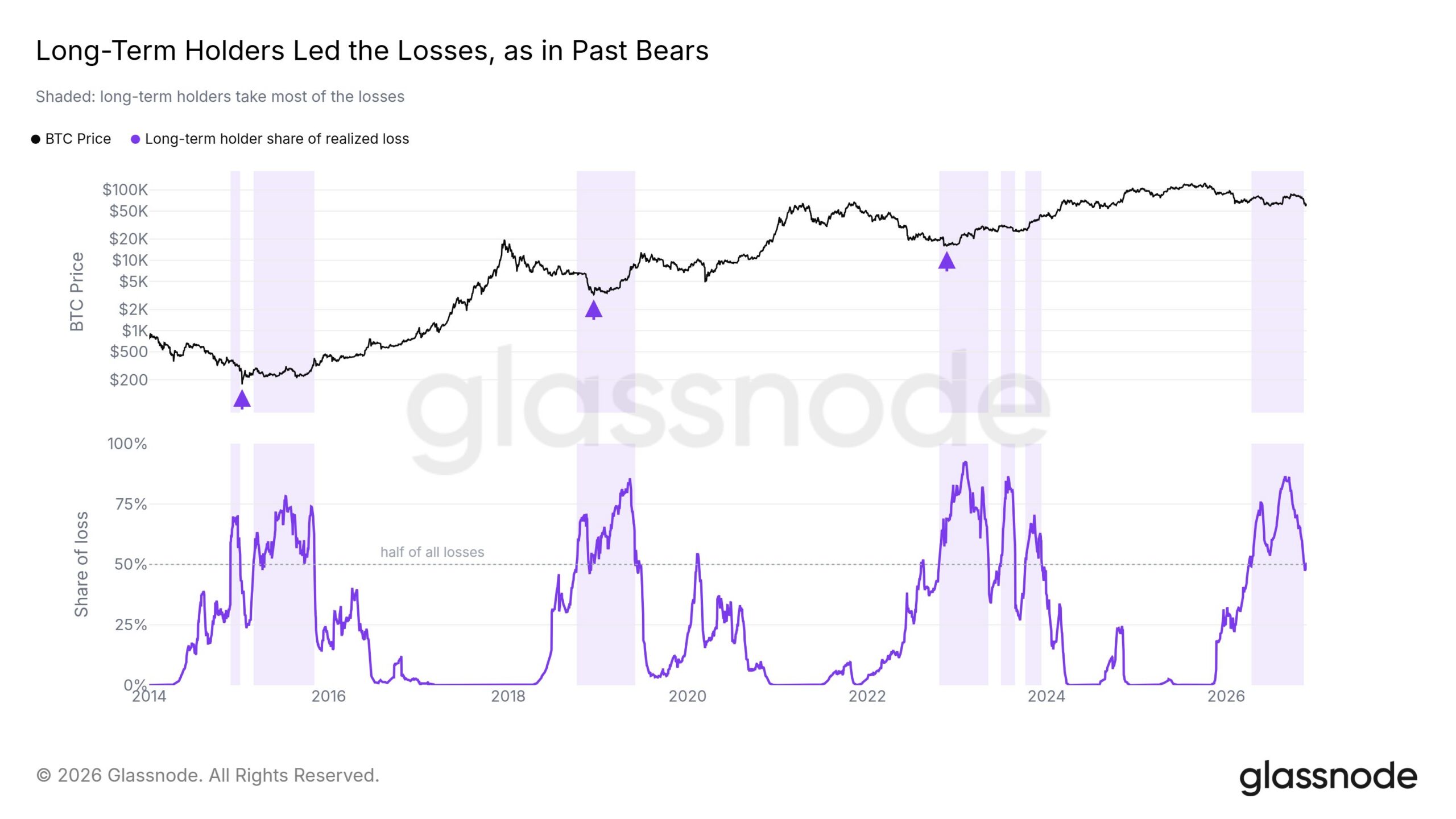
U.S. spot Bitcoin ETFs recorded $4.3 billion in net outflows over 20 trading days. Coinbase traders were heavy net sellers over the preceding month, while buying and selling on Binance were roughly balanced. On-chain, long-term holders—those who had held their coins for roughly five months or more—accounted for most realized losses from mid-April to mid-November.
What the $53,200 realized price can tell us
Glassnode also tracks Bitcoin’s realized price: the average price at which circulating coins last moved. It stood at $53,200. Bitcoin traded below its realized price before bottoming in each of the previous three major bear markets. Applying the discount seen at the 2022 low to $53,200 gives roughly $41,000; using the deeper 2018 discount gives roughly $37,000. Those figures show what a repeat of each historical discount would look like, not where this sell-off will end.
One source of selling pressure had eased. Nearly 90% of the long futures positions vulnerable to liquidation between the previous week’s bitcoin price and $53,200 were already gone, reducing the potential for another cascade of forced sales within that range.
The nearer test was whether bitcoin could close above its June closing low of $58,500. Glassnode said a recovery above $60,000 alongside renewed ETF inflows would help it assess whether the summer lows were holding.