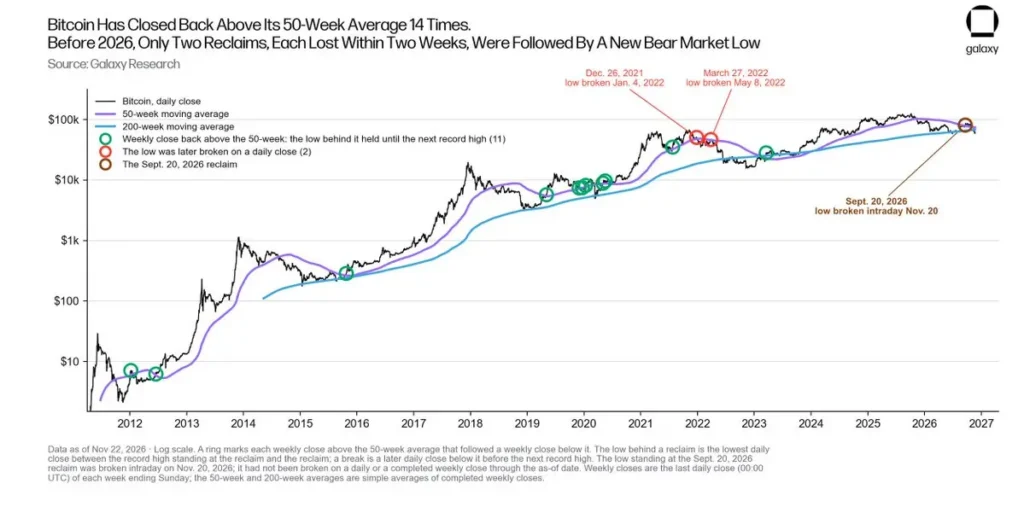
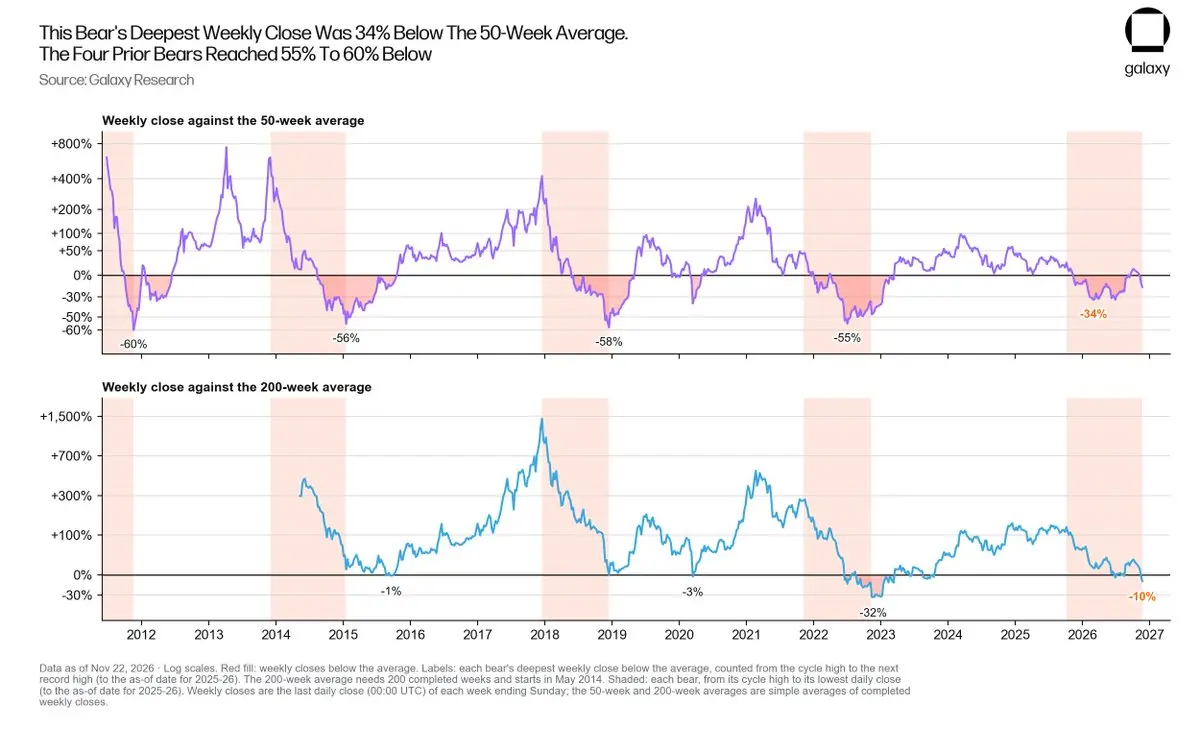
Galaxy’s October call that Bitcoin’s bear market had ended rested in part on a weekly closing price: after 44 weeks below its 50-week moving average, Bitcoin closed above it and stayed there for seven weeks. No previous recovery that lasted that long had been followed by a fresh bear-market low. In his November 26, 2026 assessment, Galaxy head of research Alex Thorn withdrew the call. Bitcoin had fallen back below the average and set a new intraday low, though June’s closing low still held.
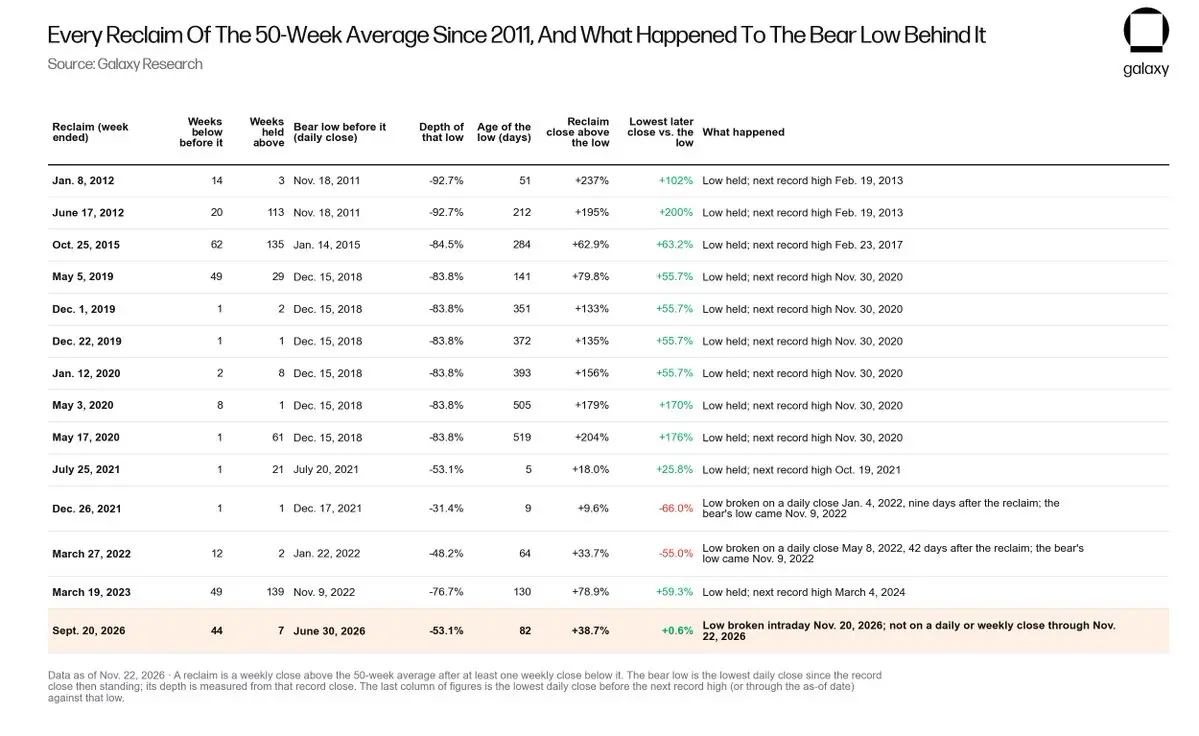
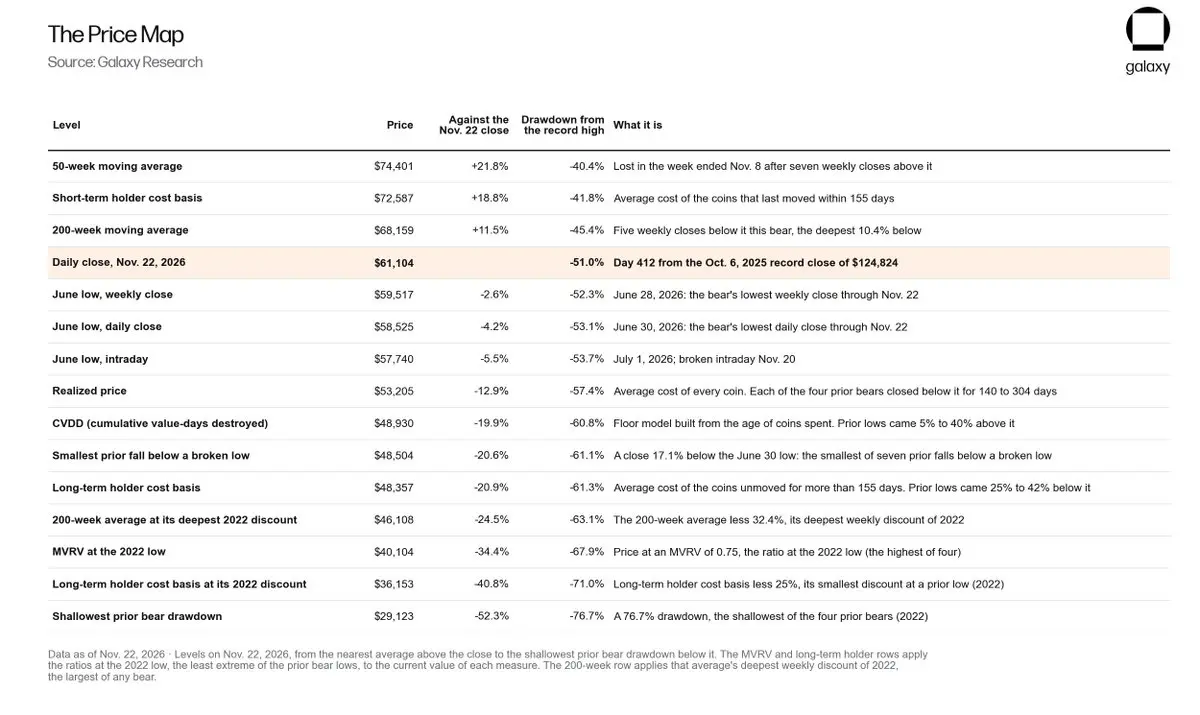
That distinction matters. Bitcoin traded at $55,100 on November 21, below the July 1 intraday low of $57,740. But its lowest daily close since the September recovery was $58,851 on November 20. By November 22 it had closed at $61,104, still 4.4% above the June 30 closing low of $58,525. Thorn judged it extremely likely that the bear market had not ended. In his view, a daily close below $58,525 would mark the start of a substantially lower move, not merely confirm a low already visible in intraday trading.
What the 50-week average missed
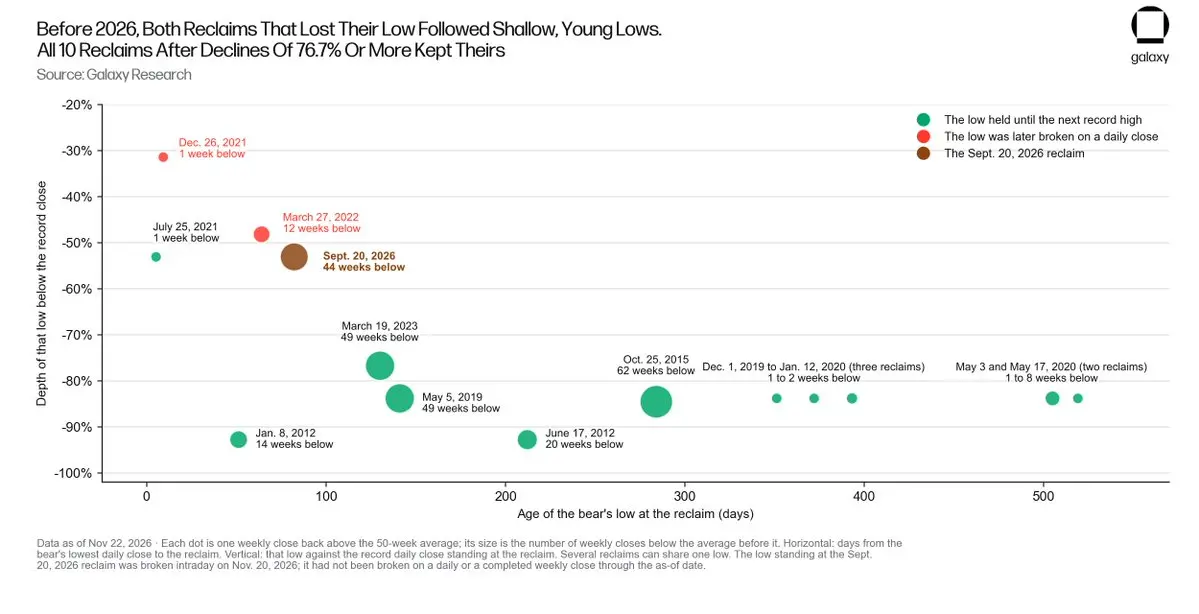
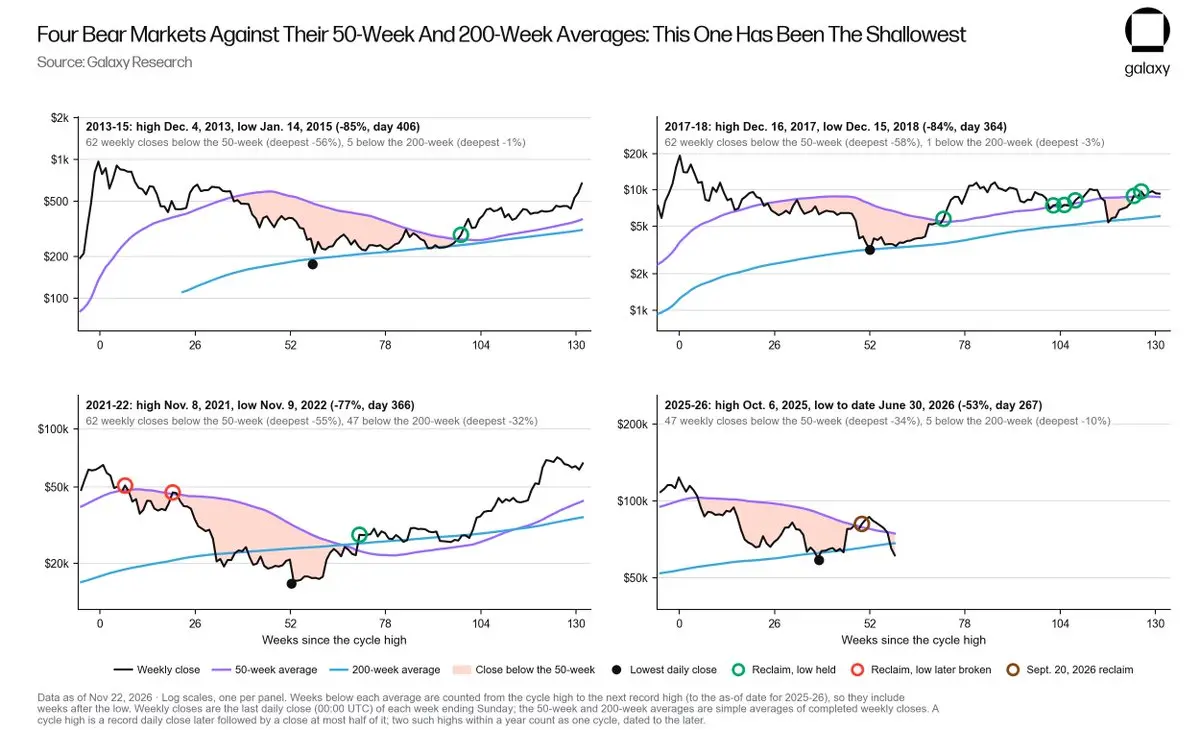
Galaxy counts a recovery when Bitcoin closes a week above the 50-week average after at least one weekly close below it. In the week ending September 20, Bitcoin closed at $81,195 against an average of $78,787. It lost the average in the week ending November 8 and closed below the 200-week average the following week. By November 22, its weekly close was 24.7% below the September recovery close. Galaxy’s original test allowed roughly until December 8 to regain the 50-week average, but Thorn saw no reason to wait: reaching its November 22 level of $74,401 would have required a 21.8% rally.
The historical record looked stronger when measured in weeks than when measured in losses. Of 13 previous recoveries since 2011, only two were followed by a daily close below the preceding bear-market low before the next record high. Both came in the 2021–22 bear market, after just one and 12 weeks below the average. But all five previous recoveries that ended longer stretches below the line followed declines of 76.7% to 92.7%. September’s followed a decline of just 53.1%. Bitcoin had not tested the signal after both a long stretch below the average and such a shallow drawdown.
Nor were the 13 observations independent: they represented just seven distinct lows, with six recoveries above the December 2018 low alone. The cutoffs for a long or sustained recovery were chosen after the fact. Even September’s 44-week count hinged on a single earlier weekly close that missed the average by $21.
What a close below $58,525 would mean
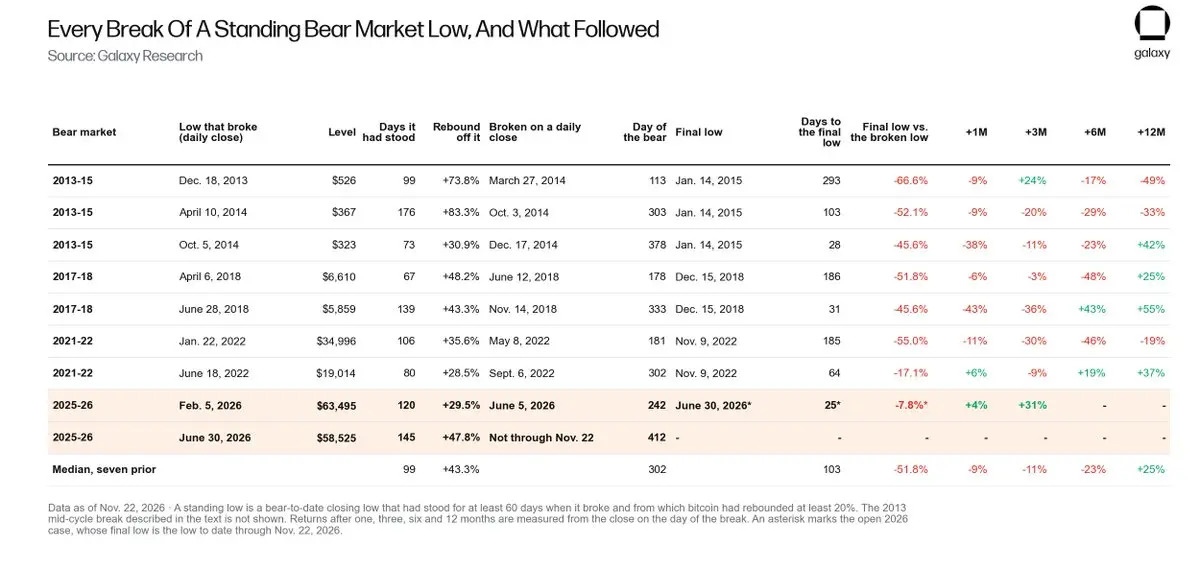
Galaxy defined an established low as a bear-market closing low that held for at least 60 days and from which Bitcoin rebounded at least 20%. June 30 qualified on both counts: by November 22 the low had held for 145 days, with a 47.8% rally to the October 4 close.
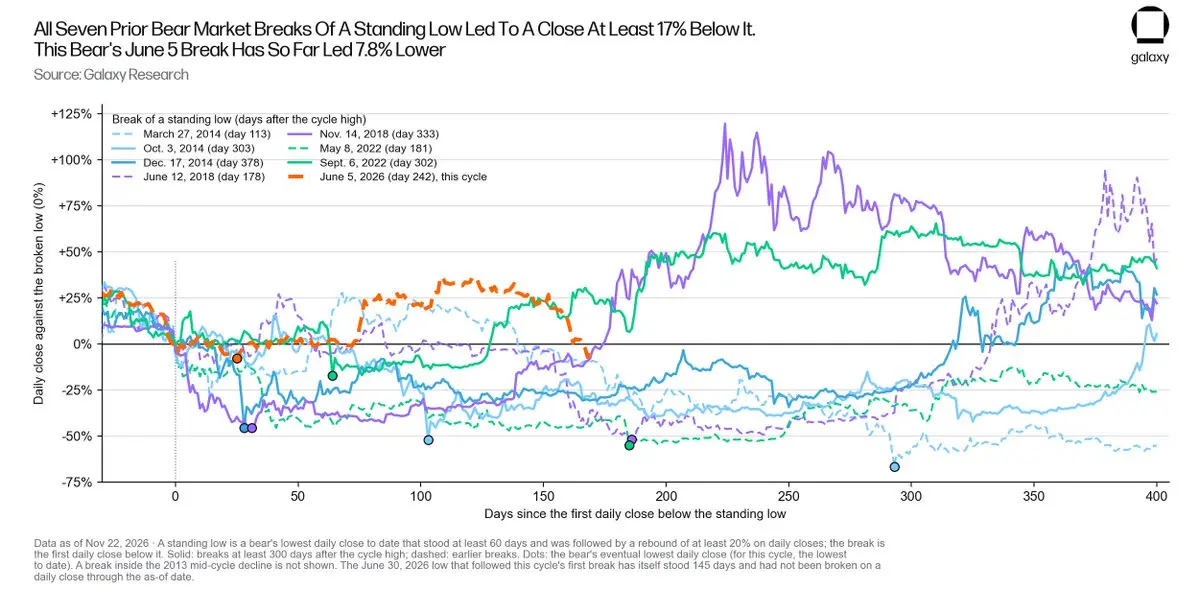
In seven completed bear-market cases across 2014, 2018 and 2022, the eventual closing low was 17.1% to 66.6% below the broken low, with a median decline of 51.8%. Applying the smallest and median declines to $58,525 gives roughly $48,500 and $28,200, respectively. Those are historical comparisons, not price targets.
An unfinished 2026 case shows why the distinction matters. On June 5, Bitcoin closed below its February 5 low of $63,495. The June 30 close was 7.8% lower, the smallest extension recorded as of November 22, but not necessarily the final one. The sample also depends on where a cycle ends: Galaxy excluded a 2013 midcycle break that extended just 2.8% because Bitcoin regained its record within the year.
Time and valuation give different answers
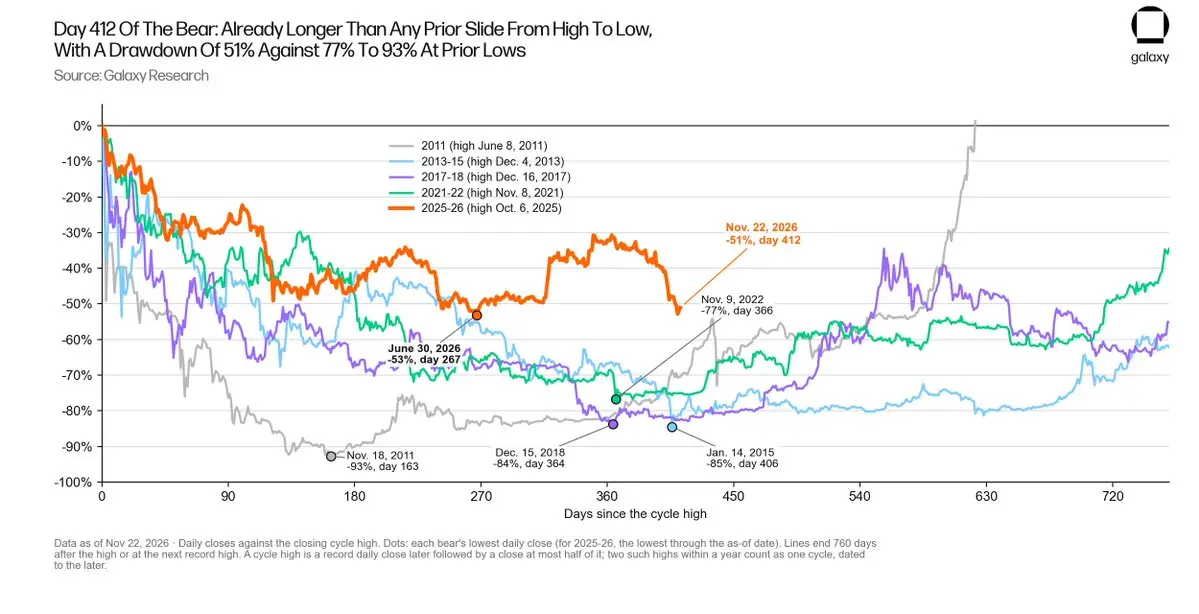
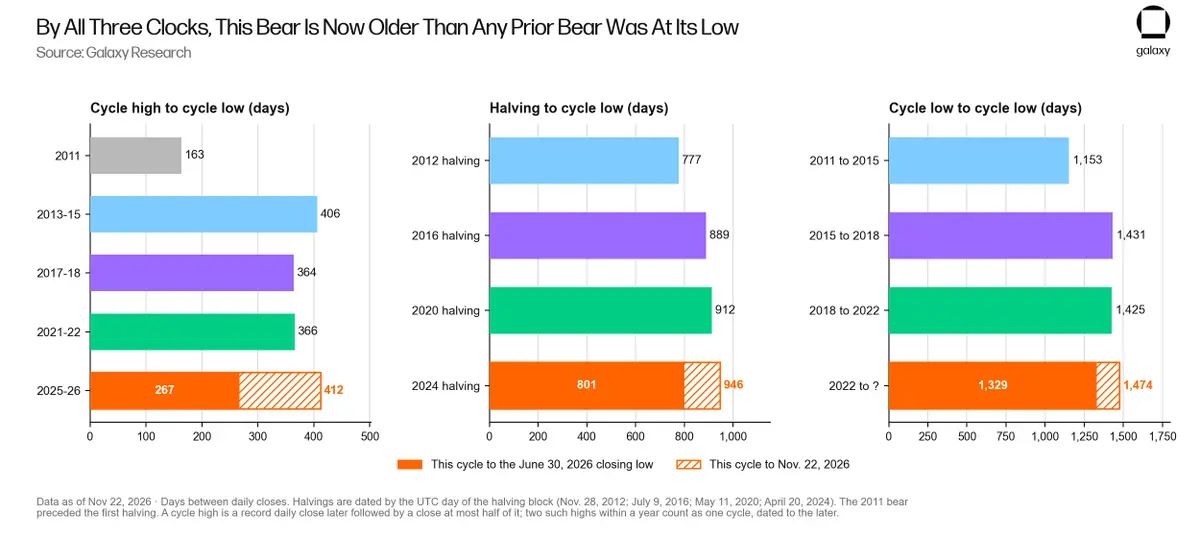
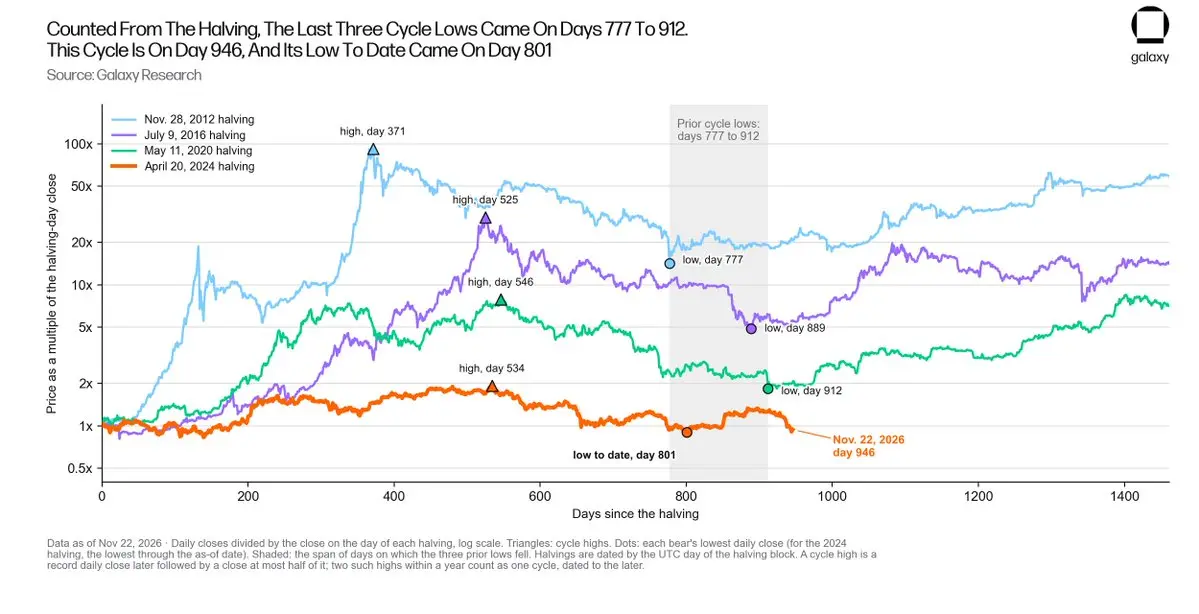
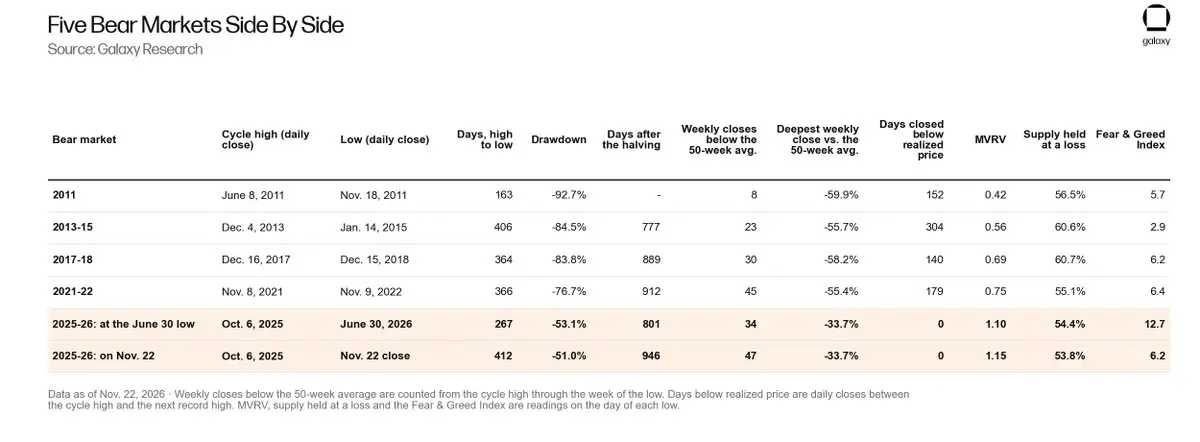
November 22 was day 412 after the October 6, 2025 record close of $124,824. The four earlier bear markets reached their lows after 163 to 406 days. It was also day 946 after the halving, later than the three previous post-halving lows at 777 to 912 days. If June’s closing low broke, the new low would arrive later than any of those precedents. Three or four cycles, Thorn cautioned, do not establish a timetable.
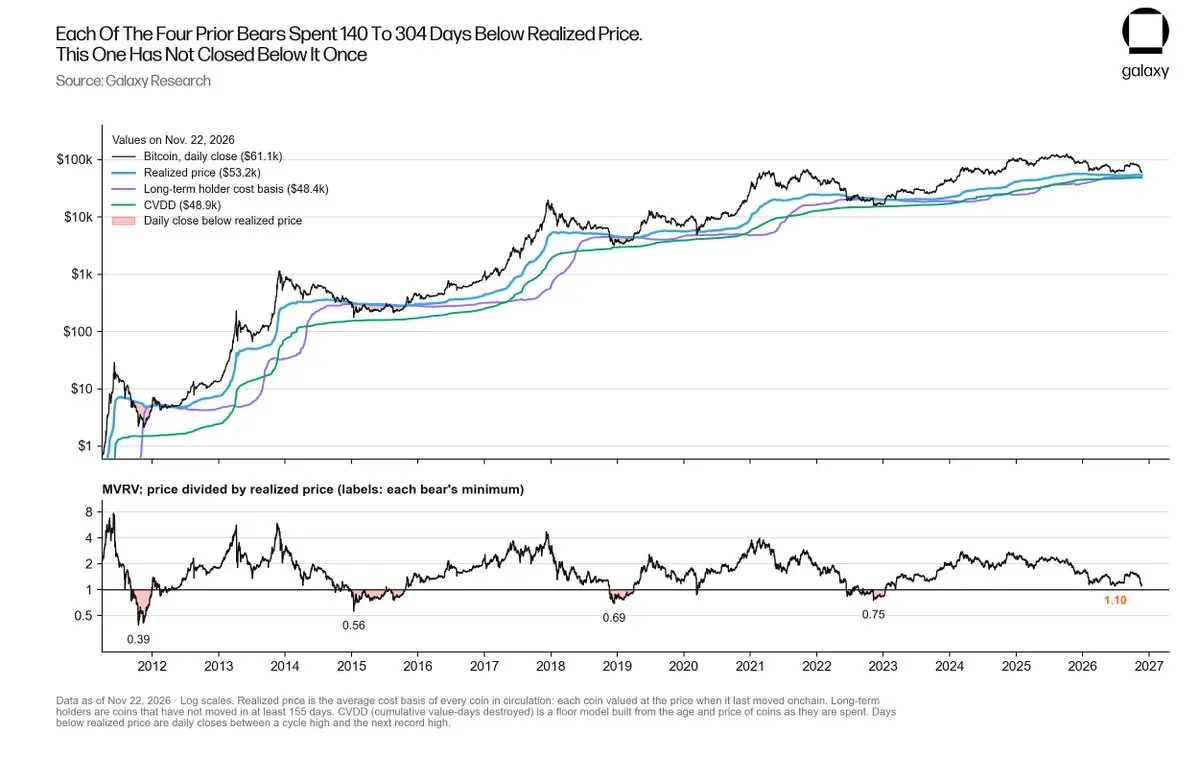
By price, June looked less like a completed bear market. Its 53% closing drawdown compared with 77% to 93% in the four earlier cycles. Bitcoin had not closed below realized price, the estimated average cost basis calculated from the price at which each coin last moved on-chain. Earlier bear markets spent at least 140 days below it.
Galaxy’s text puts realized price at $53,205 on November 22 and MVRV, the ratio of market price to realized price, at 1.15. That ratio is consistent with the $61,104 close. The accompanying chart instead labels MVRV at 1.10 and gives the earliest bear-market minimum as 0.39 rather than the text’s 0.42. The exact readings differ, but the comparison is the same: Bitcoin remained above aggregate cost basis, whereas the four earlier lows were below it.
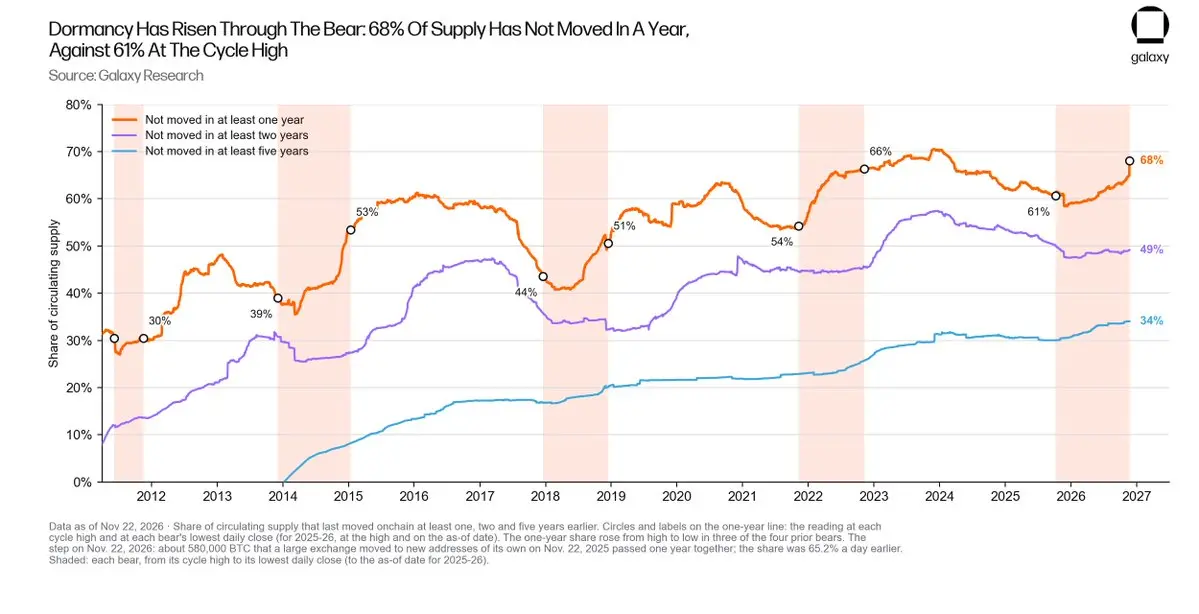
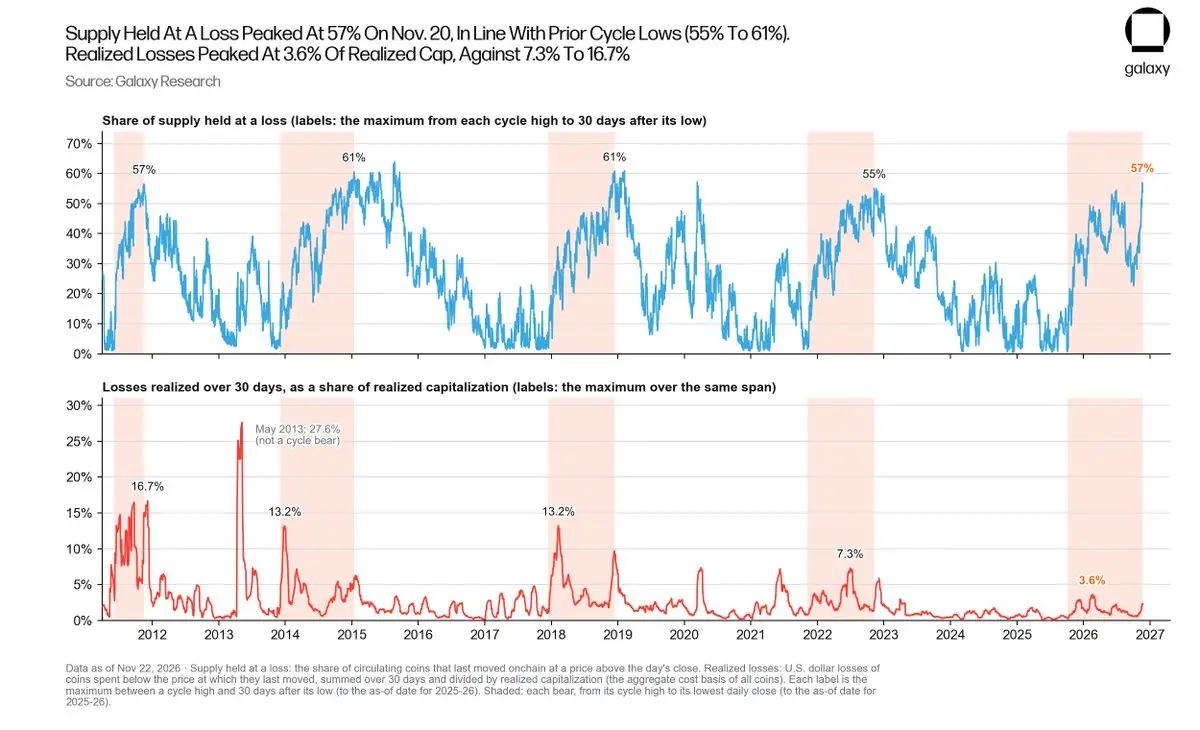
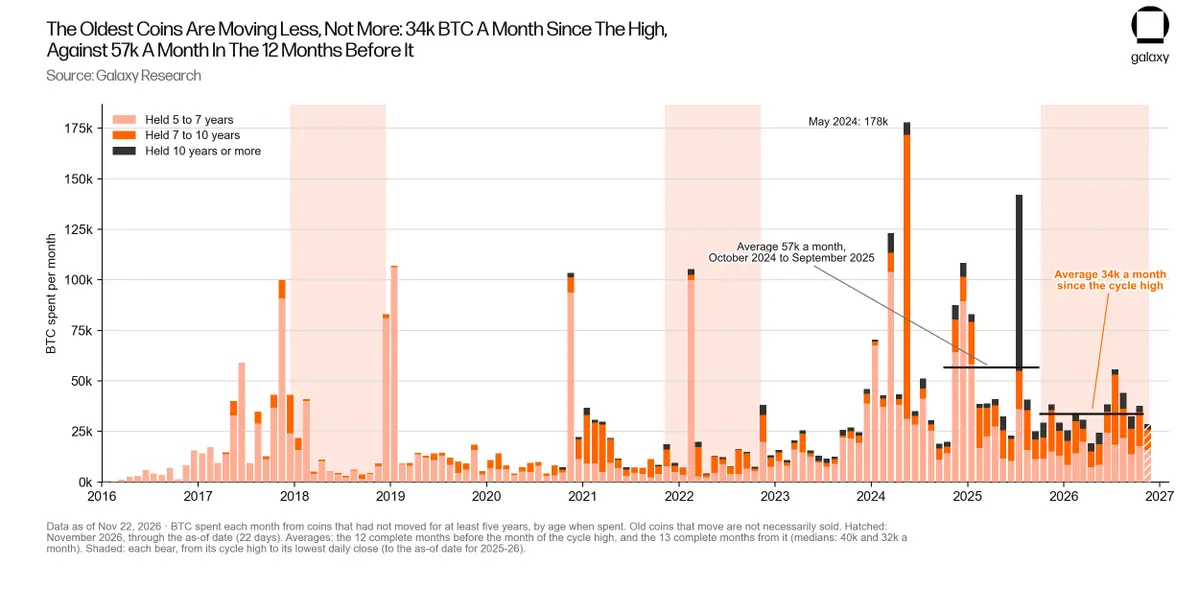
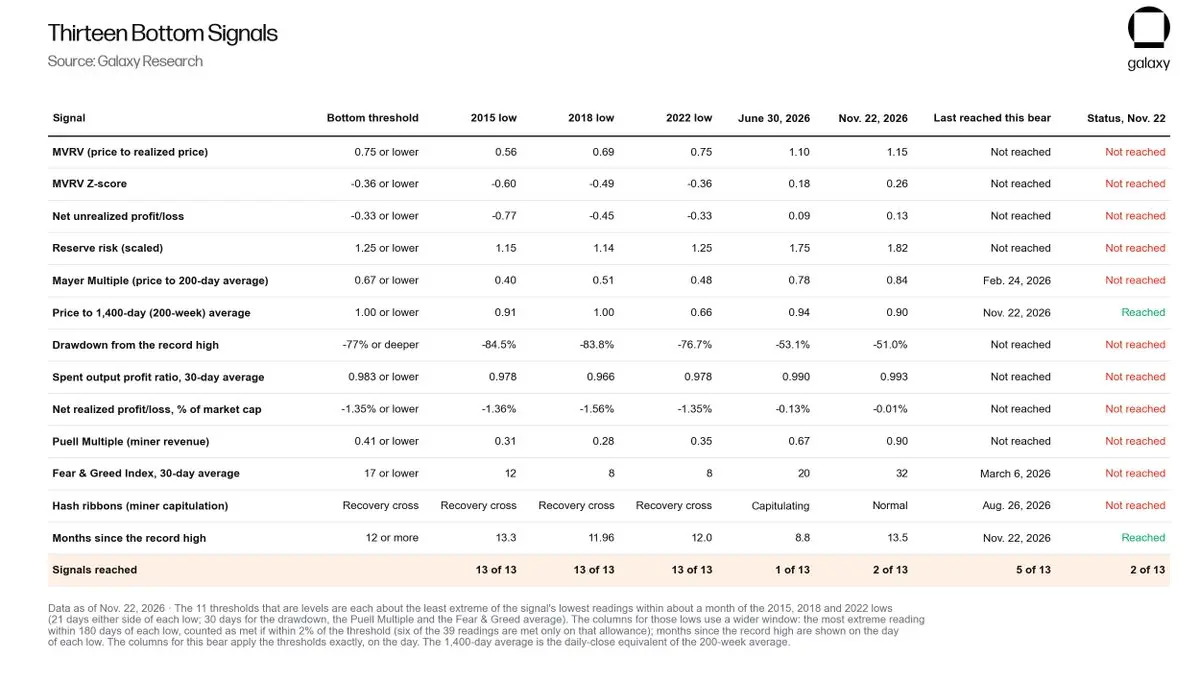
Paper losses were already widespread. On November 20, 57% of supply was in loss, within the 55% to 61% range observed at previous bottoms. Holders had not realized losses on the same scale: the cycle peak for 30-day realized losses was 3.6% of realized capitalization, against 7.3% to 16.7% in earlier bear markets. Likewise, only two of Galaxy’s 13 bottom indicators were active on November 22: price was below the 200-week average, and more than 12 months had elapsed since the peak. The checklist describes resemblance to earlier lows; its thresholds were fitted to the 2015, 2018 and 2022 episodes, not independently validated against them.
Rates, fund holdings and the next weekly close
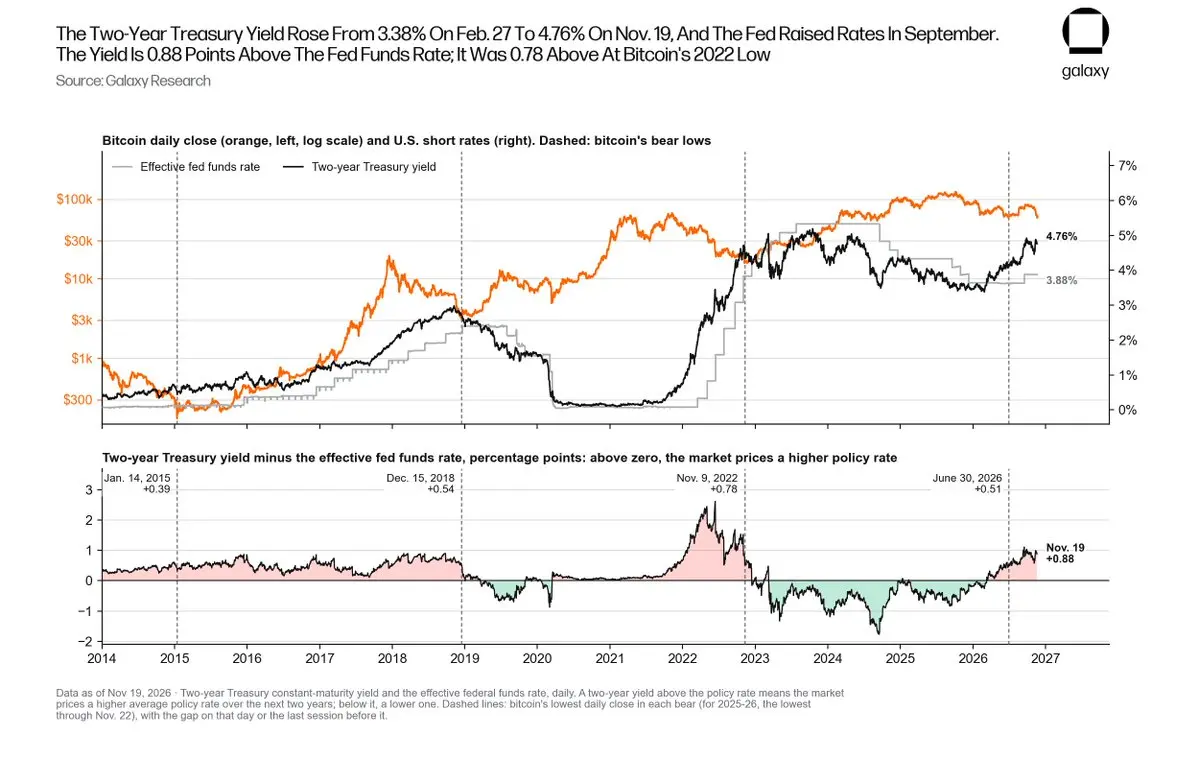
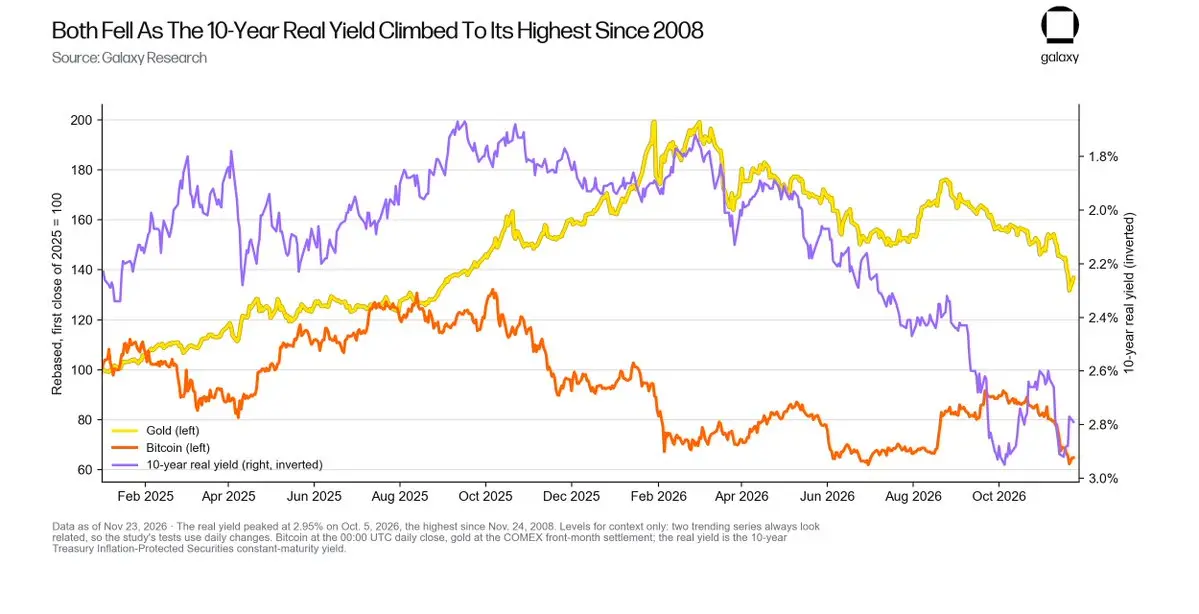
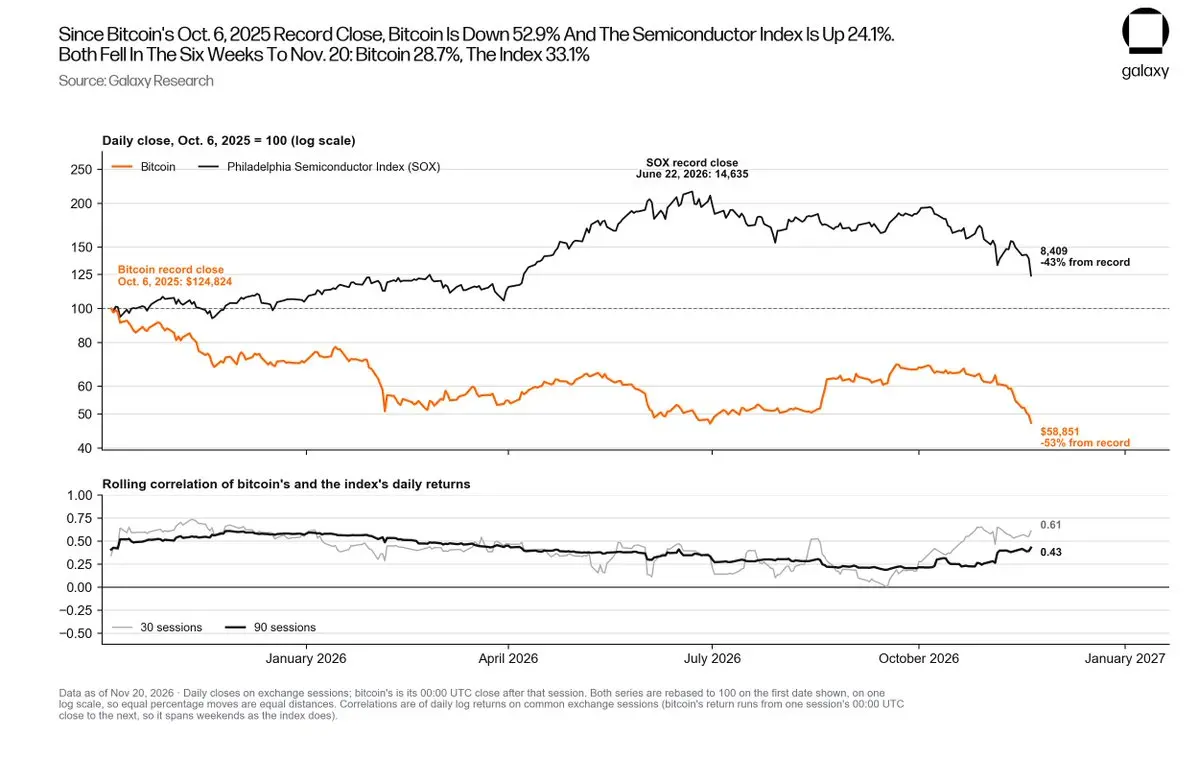
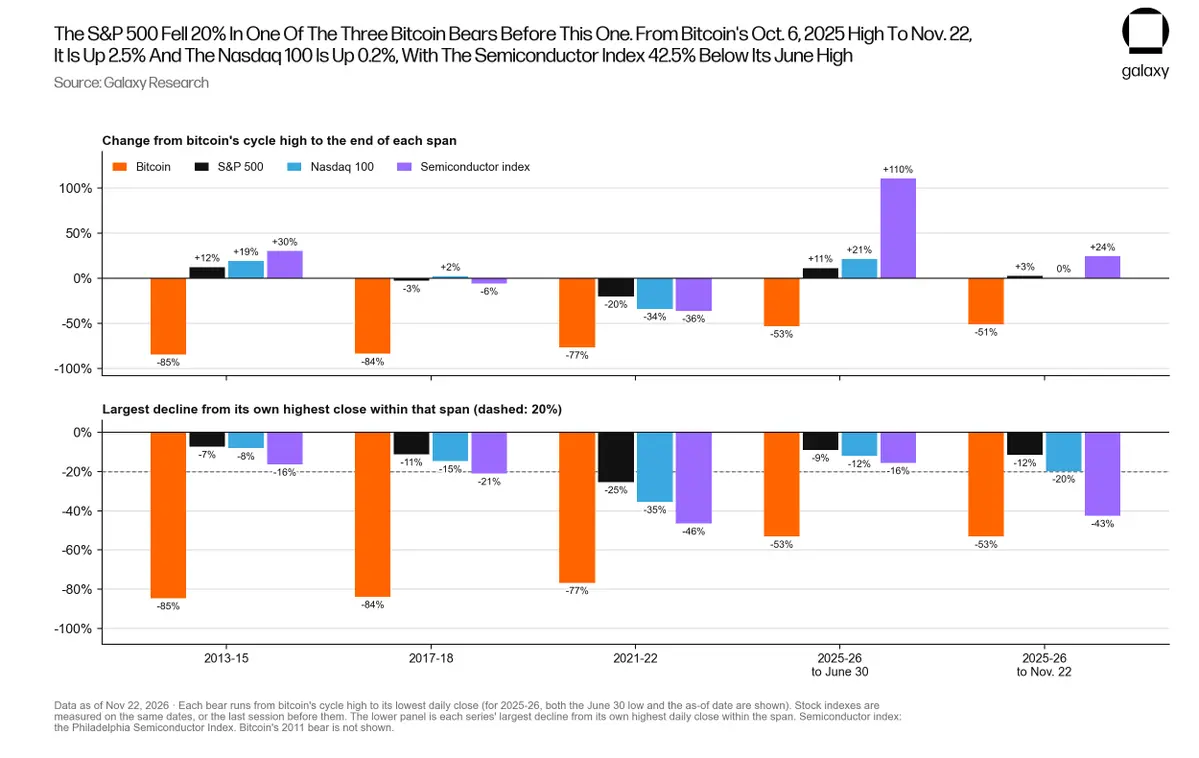
On November 19, the two-year Treasury yield stood 0.88 percentage points above the effective federal funds rate, up from 0.51 points at Bitcoin’s June low but down from 1.11 points on September 16. Equities had also weakened: on November 20 the S&P 500 closed 11.6% below its record, versus just 1.5% below at Bitcoin’s June low. Thorn treated rates as context rather than a daily price signal: over 90 trading days, the correlation between Bitcoin returns and daily changes in the two-year yield was −0.02.
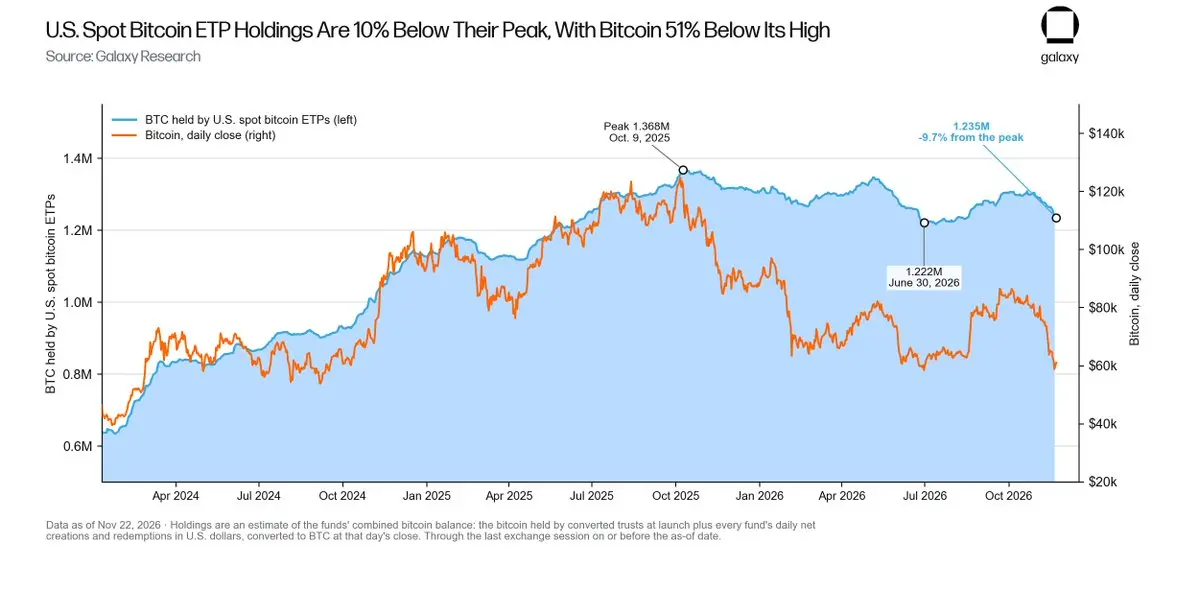
Galaxy estimated that US spot Bitcoin exchange-traded products held 1.24 million BTC after shedding 71,339 BTC since October 4. Thorn was watching whether holdings would fall below roughly 1.22 million BTC. The report dates that low to July 13 in the text, while the holdings chart labels a 1.222 million BTC low on June 30; the date is unresolved.
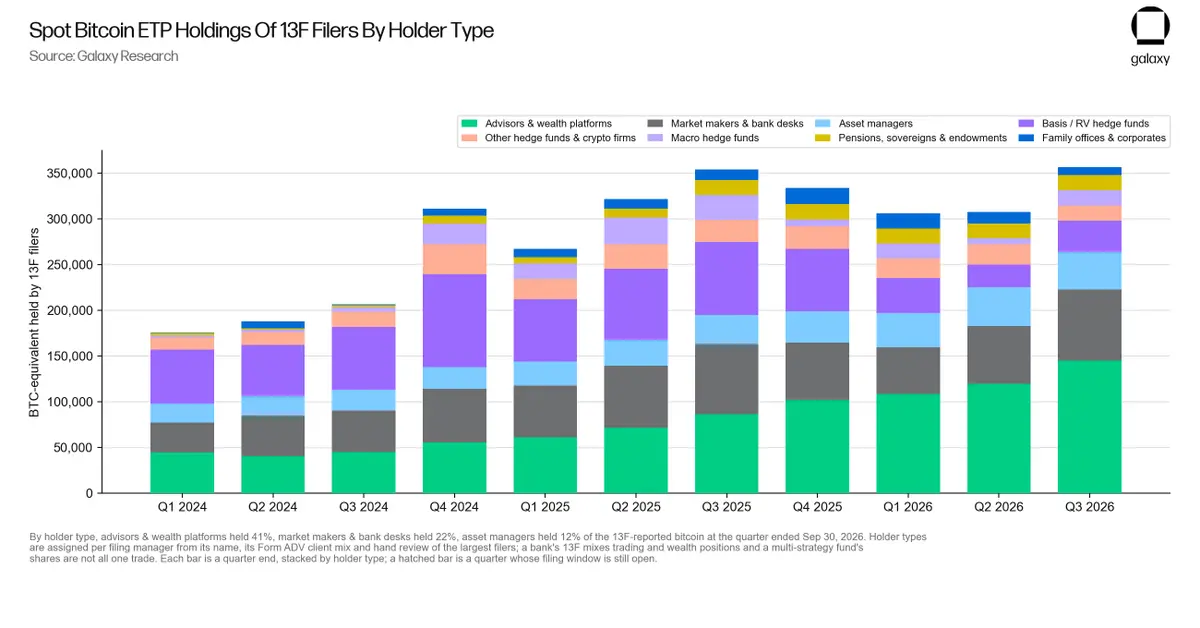
Quarterly filings showed a different part of the positioning picture. At September 30, advisers and wealth platforms reported a record 144,972 BTC equivalent in the products, or 40.6% of all holdings reported on Form 13F. Three banks accounted for nearly all the quarterly increase. Thorn interpreted one bank’s addition as dealer positioning rather than wealth-client demand because almost all of it sat in dealer and trading units.
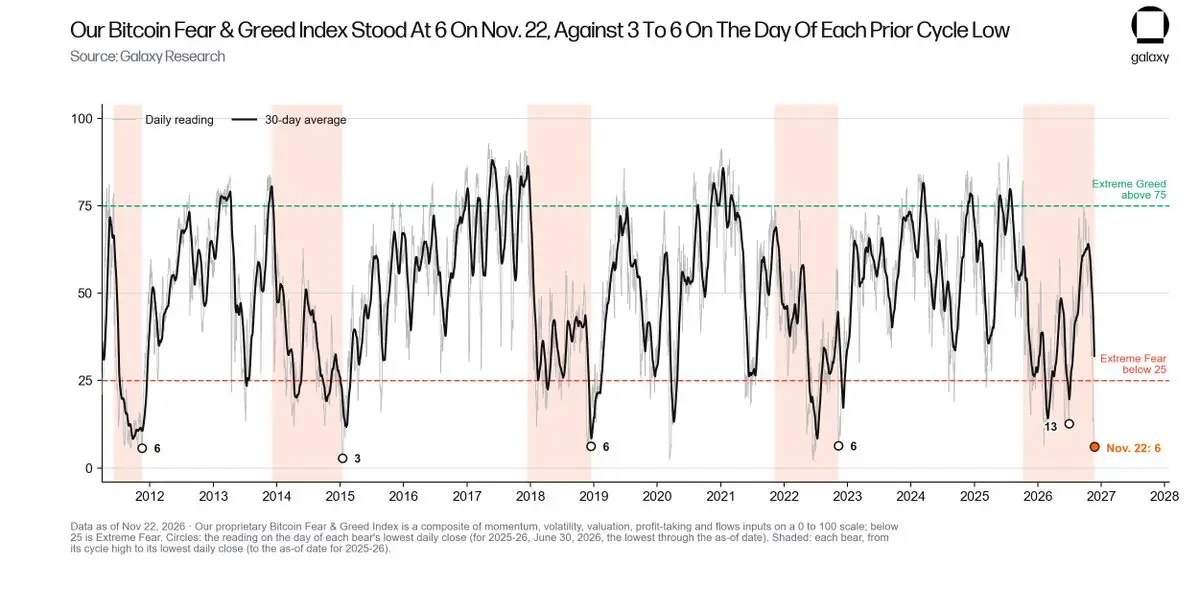
For Thorn, a recovery would become more credible if Bitcoin held June’s $59,517 weekly closing low, then reclaimed the 200-week and 50-week averages on weekly closes. Those averages stood at $68,159 and $74,401 on November 22. His assessment was bearish, but its scope was specific: the technical case for a June bottom had failed. Price history alone could not tell him whether this cycle’s unusually long duration or its unusually shallow decline would ultimately matter more.
Disclosure: Thorn and Galaxy Digital may have economic interests in assets discussed. Galaxy trades financial instruments for its own account and on behalf of counterparties, including through hedging transactions. It also provides services to investment vehicles and may earn higher fees if their assets appreciate.