Originally reported by PANews on November 11, 2026, at 16:40 (UTC+8).
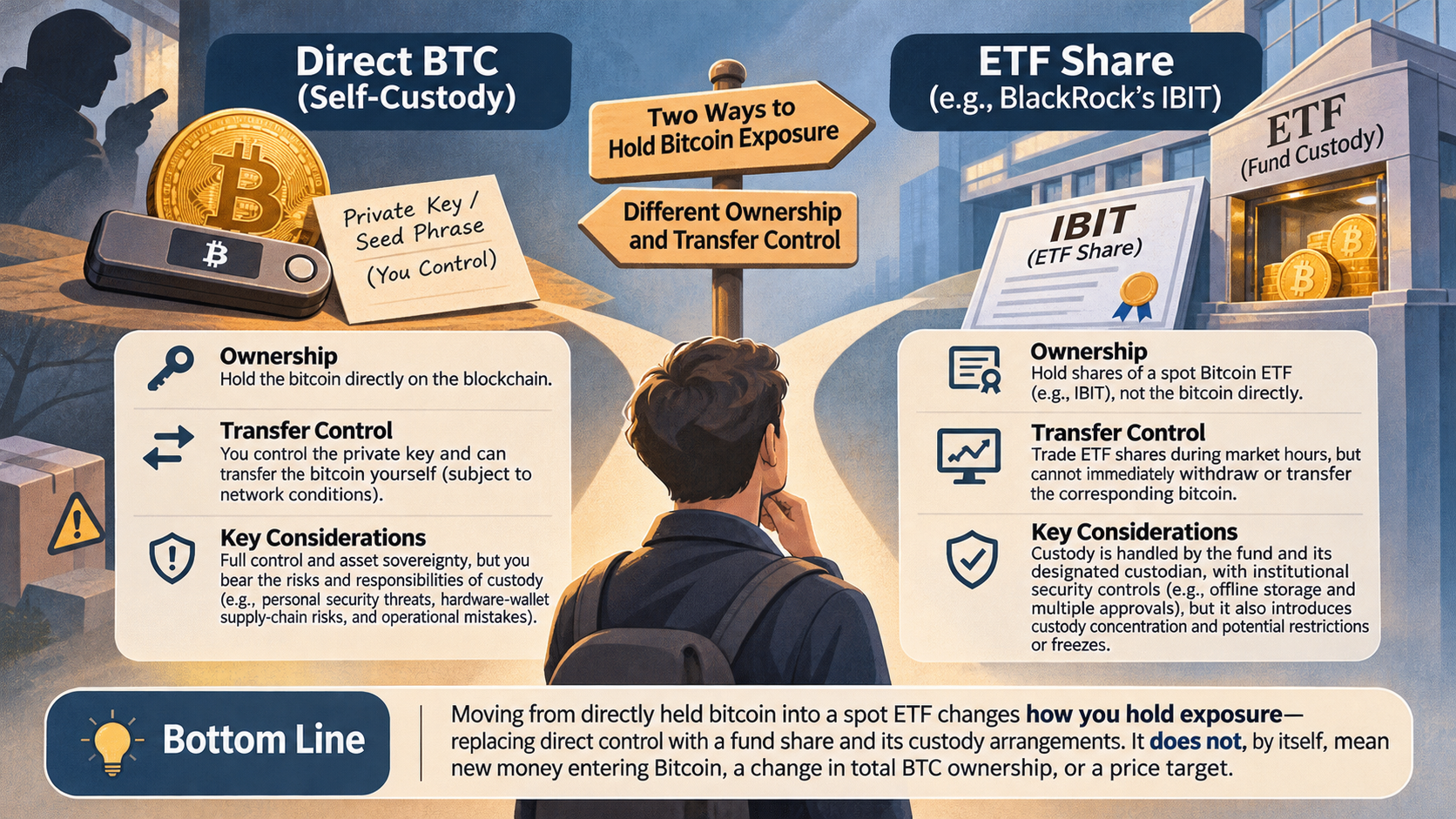
A move from directly held bitcoin into a spot ETF changes how an investor holds exposure, not what Bitcoin’s price model predicts. PANews reported that some large holders were exchanging BTC for shares of BlackRock’s IBIT, citing concerns about physical security and private-key management. The choice replaces direct control of bitcoin with a fund share and its custody arrangements.
What the reported conversions measure
BlackRock digital-assets head Robbie Mitchnick said the firm had recorded about $3.6 billion in conversions from directly held bitcoin into IBIT shares through in-kind transactions since regulators approved the process the previous year. He said the actual amount could be higher because BlackRock does not handle or observe every conversion. According to Mitchnick, clients most often cited security and peace of mind.
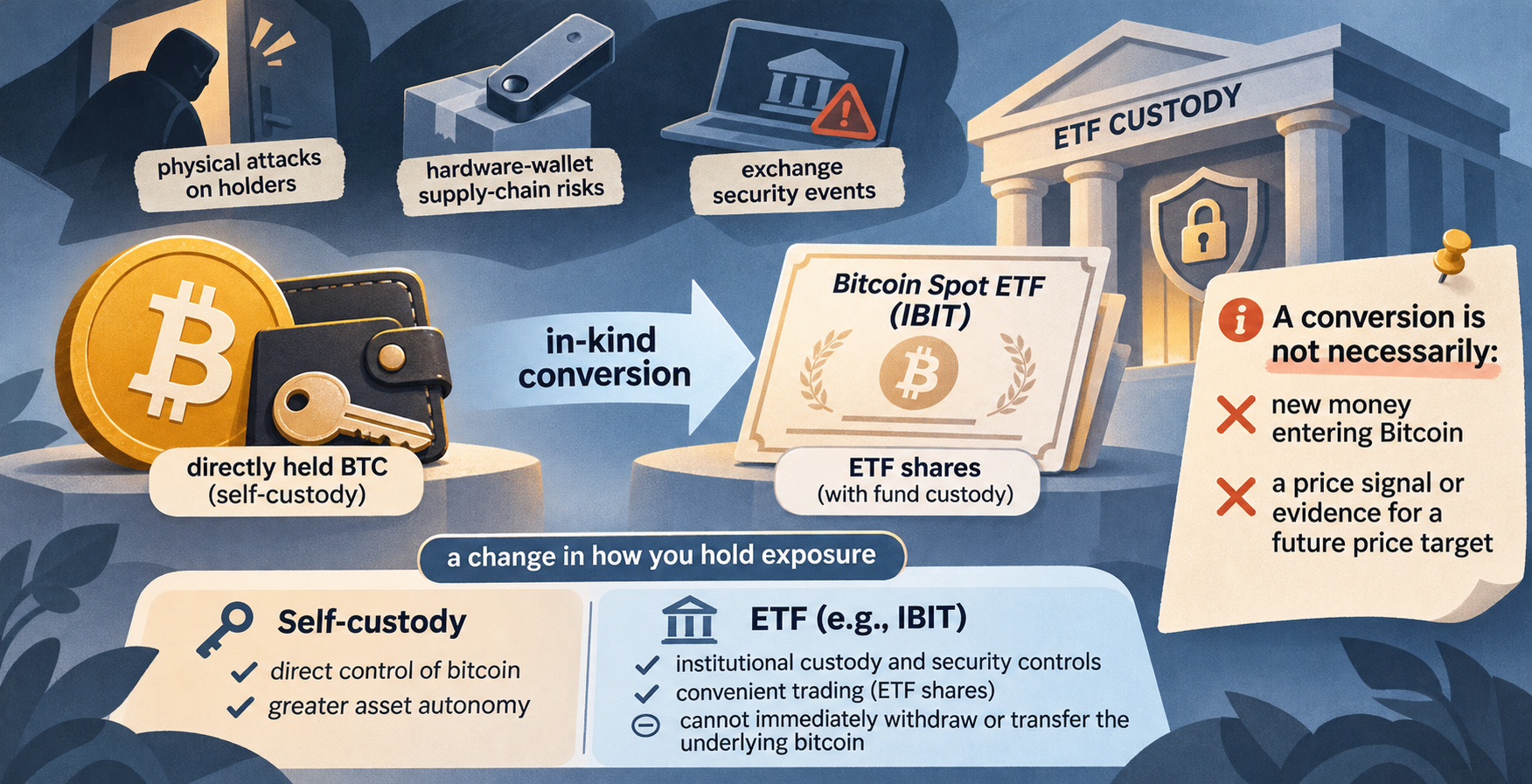
That figure describes reported asset conversions. It is not, by itself, a measure of new money entering Bitcoin, a change in total BTC ownership, or evidence for a future price target. PANews also reported that IBIT’s minimum in-kind conversion size had fallen from roughly $30 million to about $1 million–$2 million.
Why custody is part of the decision
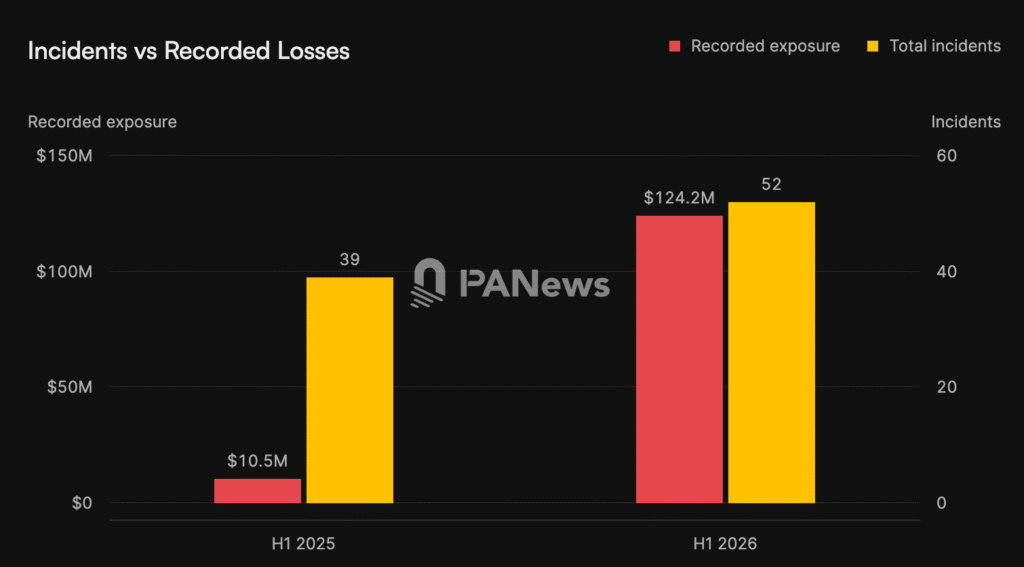
PANews cited a CertiK report recording 52 violent attacks against crypto holders worldwide in the first half of 2026, up 33.3% year over year. CertiK put the recorded funds exposed in those cases at about $124.1 million, versus $10.5 million a year earlier; 33 of the 52 cases were in France. These are CertiK’s reported figures, not a measure of every holder’s individual risk.
The article also described reported hardware-wallet supply-chain incidents and exchange security events. These concerns do not establish that self-custody or exchange custody is uniformly unsafe. They show why a holder might compare different failure points rather than treat any one method as risk-free.
PANews reported that analyst PlanB said he had moved his bitcoin holdings into an ETF in 2025, preferring not to manage hardware wallets and private keys himself. By contrast, self-custody advocates cited in the article argued that an ETF gives up direct control and may reintroduce risks such as restrictions or freezes.
What an ETF changes—and does not
Bitwise chief investment officer Matt Hougan described protections including offline custody and multiple approvals for transfers. He also noted a limitation: an ETF investor can trade shares during the trading day but cannot immediately withdraw or transfer the corresponding bitcoin. Those are different capabilities, not interchangeable forms of ownership.
Concentration remains another question. PANews said Coinbase disclosed an approximately 90% share of the Bitcoin ETF custody market. Coinbase described cold storage, segregated assets and other controls; OneKey founder Yishi, meanwhile, warned about the risk of so much underlying bitcoin being held by one custodian. Neither the reported controls nor the concentration figure alone establishes how a future incident would unfold.
For readers of Bitcoin charts, the distinction matters: ETF share ownership, direct BTC custody and price exposure can be related without being the same variable. The reported $3.6 billion conversion figure offers a view of custody preference among participating holders—not a backtest of a valuation model or a forecast.
Source: panewslab.com (originally published 2026-11-11 16:40 UTC+8)