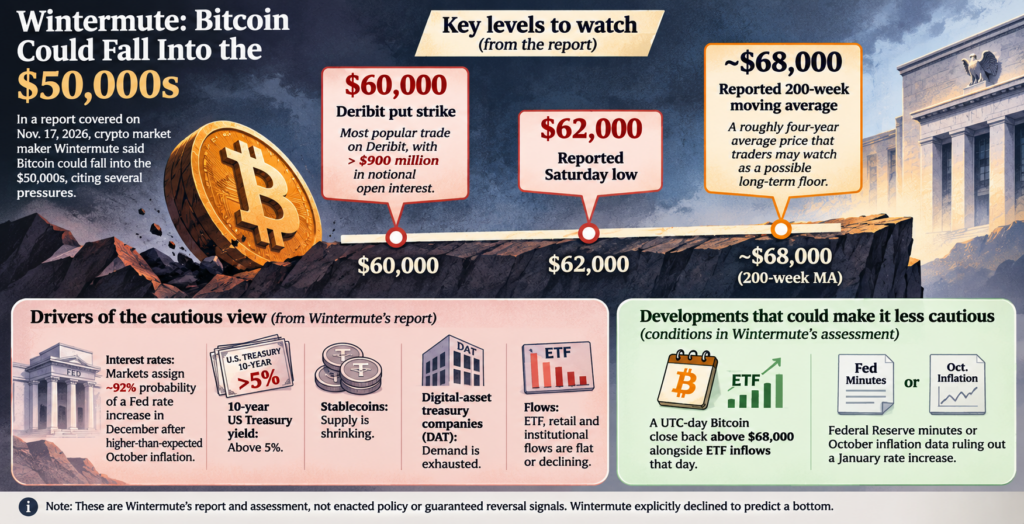
In a report covered on November 17, 2026, crypto market maker Wintermute said Bitcoin could fall into the $50,000s. Its case rested partly on Bitcoin trading well below its roughly $68,000 200-week moving average—an average of prices over approximately four years. Traders may watch that line as a possible long-term floor, but a historical average cannot establish where a decline will end.
Wintermute identified the reported $62,000 low from the preceding Saturday as one level to watch, followed by $60,000, where it said Deribit put options were concentrated. The report said $60,000 puts were Deribit’s most popular trade, with more than $900 million in notional open interest. That positioning is consistent with demand for downside exposure; it does not prove Bitcoin will reach the strike.
Wintermute also linked its cautious view to interest rates. According to its report, after higher-than-expected October US inflation data, markets assigned about a 92% probability to a Federal Reserve rate increase in December, while the 10-year US Treasury yield had risen above 5%. Wintermute argued that higher bond yields could draw capital away from Bitcoin, which pays no yield. It also cited shrinking stablecoin supply, exhausted demand from digital-asset treasury companies, and flat or declining flows across ETFs, retail and institutional channels.
The firm described two developments that could make it less cautious: a UTC-day Bitcoin close back above $68,000 alongside ETF inflows that day, or Federal Reserve minutes or October inflation data ruling out a January rate increase. These were conditions in Wintermute’s assessment, not enacted policy or guaranteed reversal signals. Wintermute explicitly declined to predict a bottom.